2023 Higher Human Biology - Paper 1 questions
Source: Scottish Qualifications Authority (SQA) / Qualifications Scotland. This is a StemInteract HTML companion, not an official HTML edition. Extracted text is supplied alongside unaltered page images; use the images or original PDF for table layout, diagrams and symbols.
Jump to a question
PDF page 1
Selectable page text
H
National
Qualications
2023
X840/76/12 Human Biology
Paper 1 — Multiple choice
THURSDAY, 27 APRIL
9:00 AM – 9:40 AM
Total marks — 25
Attempt ALL questions.
You may use a calculator.
Instructions for the completion of Paper 1 are given on page 02 of your answer booklet
X840/76/02.
Record your answers on the answer grid on page 03 of your answer booklet.
Space for rough work is provided at the end of this booklet.
Before leaving the examination room you must give your answer booklet to the Invigilator; if you
do not, you may lose all the marks for this paper.
©
*X8407612*
A/HTPPDF page 2
Question 1Question 2Question 3Question 4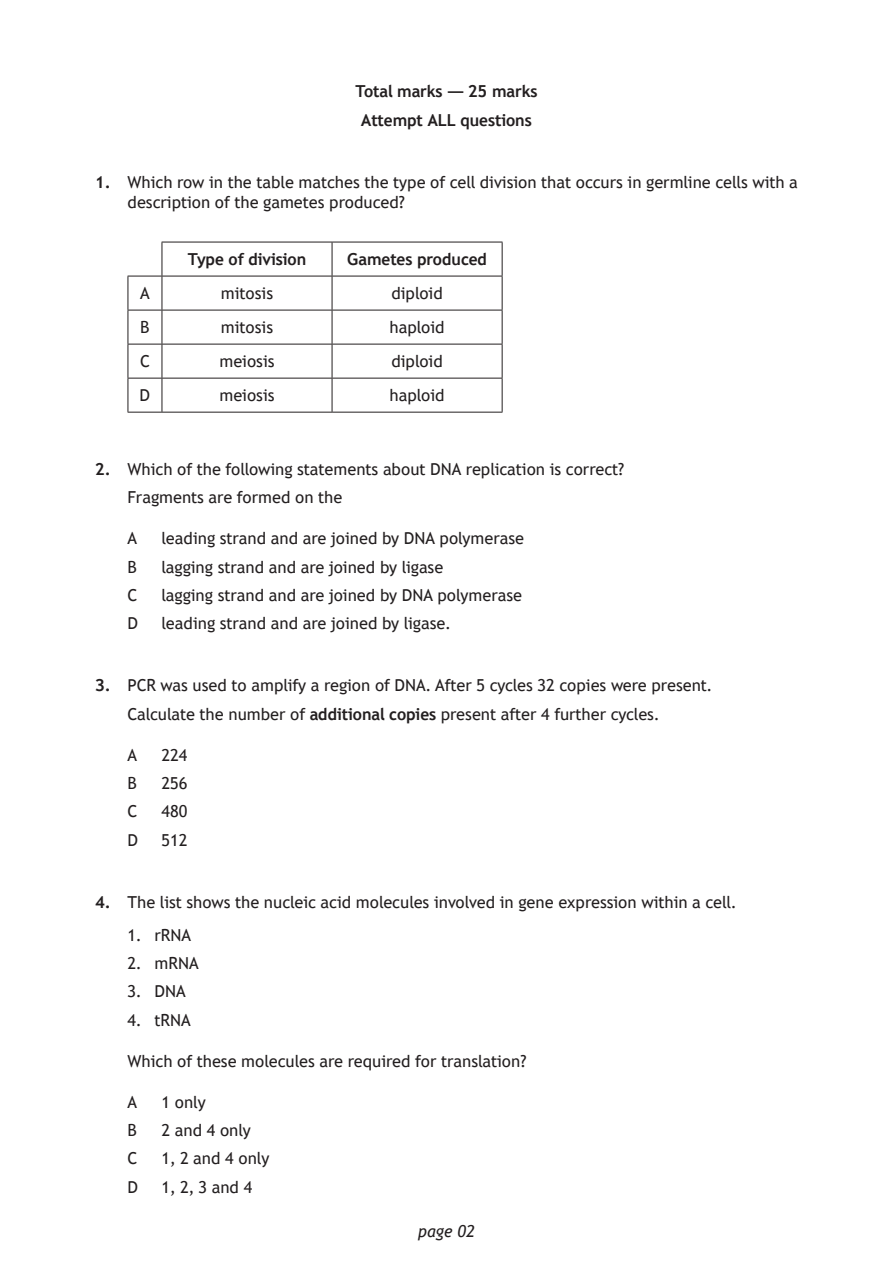
Selectable page text
Total marks — 25 marks

                        Attempt ALL questions

1. Which row in the table matches the type of cell division that occurs in germline cells with a
   description of the gametes produced?

        Type of division Gametes produced

    A      mitosis         diploid
    B      mitosis         haploid

    C      meiosis         diploid

    D      meiosis         haploid

2. Which of the following statements about DNA replication is correct?
   Fragments are formed on the

   A  leading strand and are joined by DNA polymerase

   B  lagging strand and are joined by ligase
   C  lagging strand and are joined by DNA polymerase

   D  leading strand and are joined by ligase.

3. PCR was used to amplify a region of DNA. After 5 cycles 32 copies were present.
   Calculate the number of additional copies present after 4 further cycles.

   A  224

   B  256
   C  480

   D  512

4. The list shows the nucleic acid molecules involved in gene expression within a cell.

   1. rRNA
   2. mRNA
   3. DNA

   4. tRNA

   Which of these molecules are required for translation?

   A  1 only

   B  2 and 4 only
   C  1, 2 and 4 only

   D  1, 2, 3 and 4

                             page 02
PDF page 3
Question 5Question 6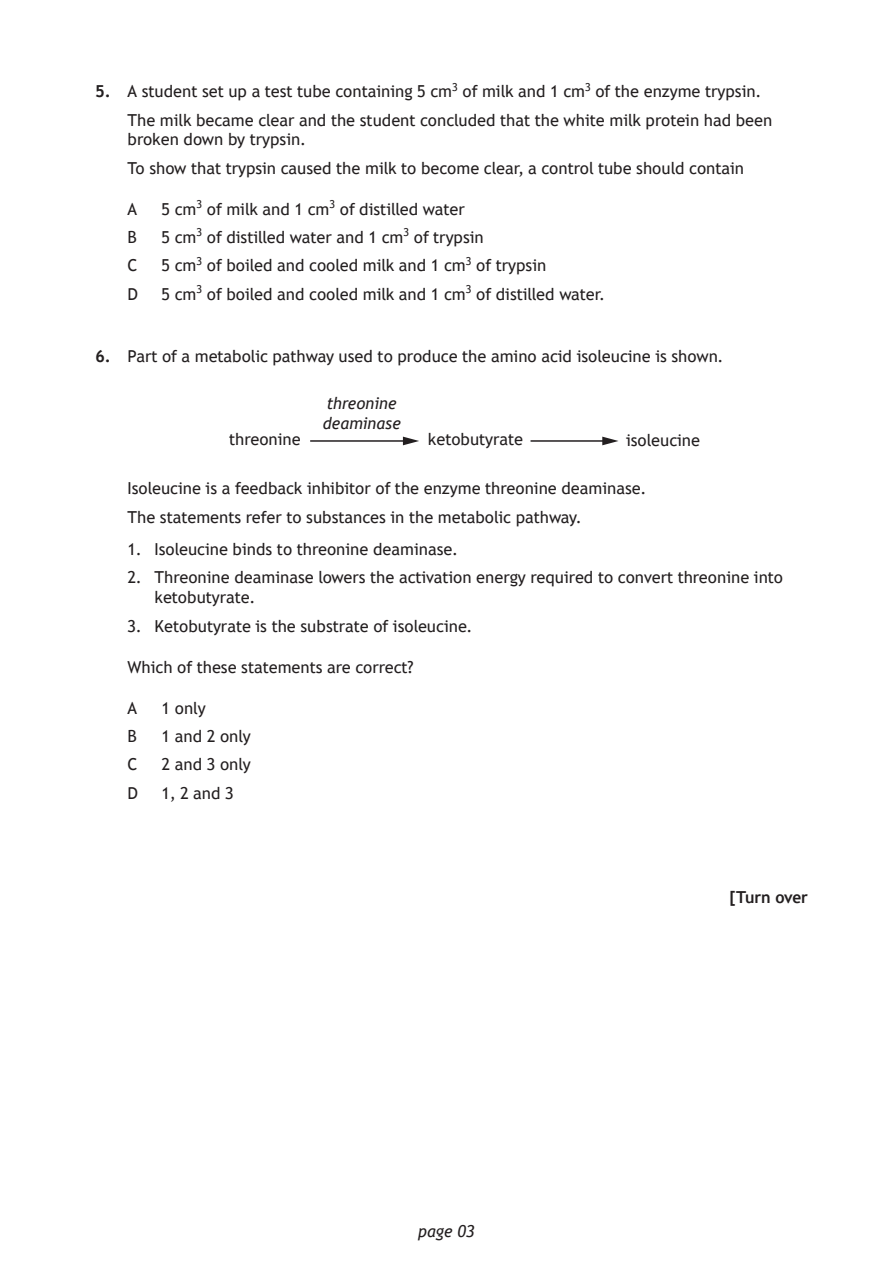
Selectable page text
5. A student set up a test tube containing 5 cm3 of milk and 1 cm3 of the enzyme trypsin.

   The milk became clear and the student concluded that the white milk protein had been
   broken down by trypsin.
   To show that trypsin caused the milk to become clear, a control tube should contain

   A  5 cm3 of milk and 1 cm3 of distilled water

   B  5 cm3 of distilled water and 1 cm3 of trypsin
   C  5 cm3 of boiled and cooled milk and 1 cm3 of trypsin

   D  5 cm3 of boiled and cooled milk and 1 cm3 of distilled water.

6. Part of a metabolic pathway used to produce the amino acid isoleucine is shown.

                     threonine
                     deaminase
            threonine         ketobutyrate       isoleucine

   Isoleucine is a feedback inhibitor of the enzyme threonine deaminase.
   The statements refer to substances in the metabolic pathway.

   1. Isoleucine binds to threonine deaminase.
   2. Threonine deaminase lowers the activation energy required to convert threonine into
     ketobutyrate.

   3. Ketobutyrate is the substrate of isoleucine.

   Which of these statements are correct?

   A  1 only
   B  1 and 2 only

   C  2 and 3 only
   D  1, 2 and 3

                                                          [Turn over

                             page 03
PDF page 4
Question 7Question 8Question 9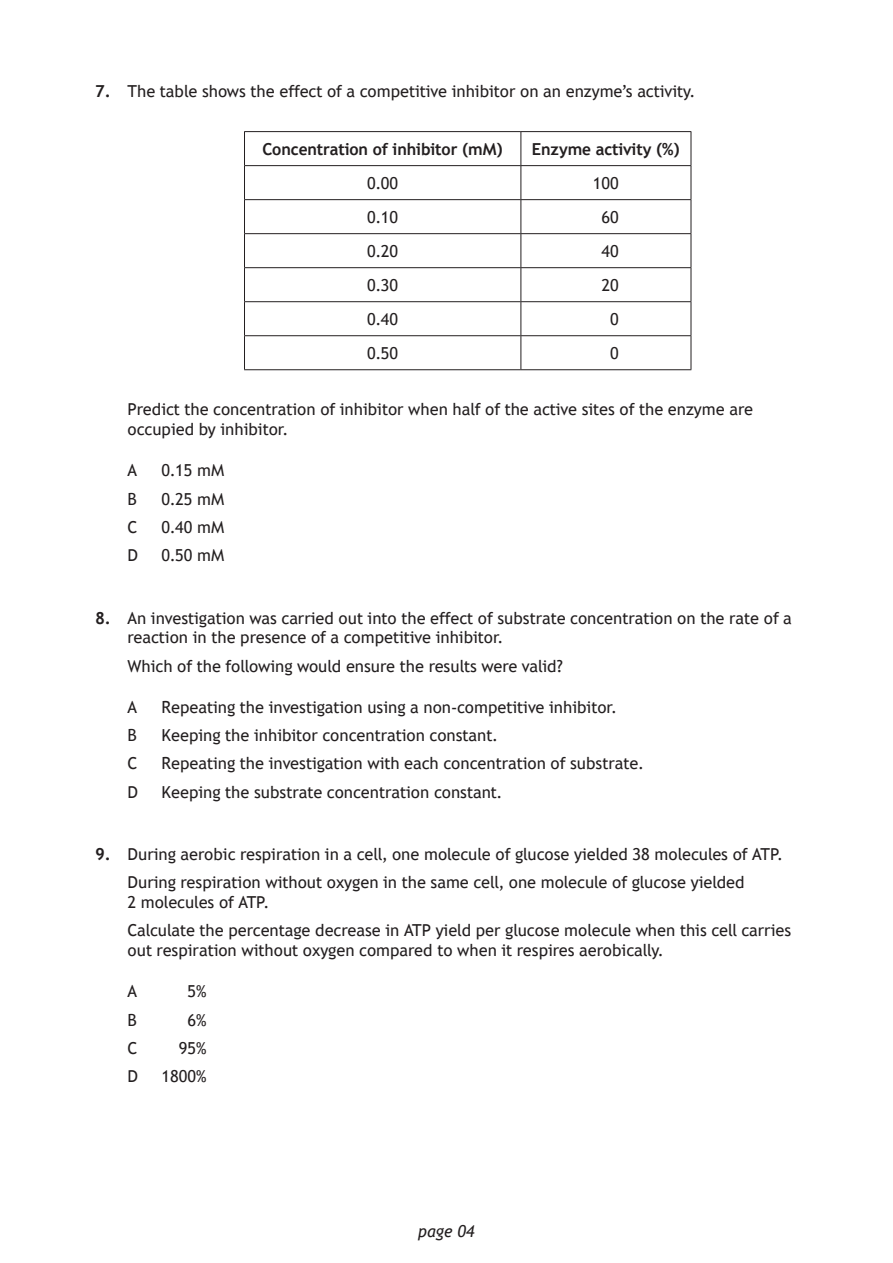
Selectable page text
7. The table shows the effect of a competitive inhibitor on an enzyme’s activity.

               Concentration of inhibitor (mM) Enzyme activity (%)

                         0.00                 100

                         0.10                 60

                         0.20                 40
                         0.30                 20

                         0.40                  0

                         0.50                  0

   Predict the concentration of inhibitor when half of the active sites of the enzyme are
   occupied by inhibitor.

   A  0.15 mM
   B  0.25 mM

   C  0.40 mM
   D  0.50 mM

8. An investigation was carried out into the effect of substrate concentration on the rate of a
   reaction in the presence of a competitive inhibitor.

   Which of the following would ensure the results were valid?

   A  Repeating the investigation using a non‑competitive inhibitor.
   B  Keeping the inhibitor concentration constant.

   C  Repeating the investigation with each concentration of substrate.
   D  Keeping the substrate concentration constant.

9. During aerobic respiration in a cell, one molecule of glucose yielded 38 molecules of ATP.

   During respiration without oxygen in the same cell, one molecule of glucose yielded
   2 molecules of ATP.
   Calculate the percentage decrease in ATP yield per glucose molecule when this cell carries
   out respiration without oxygen compared to when it respires aerobically.

   A    5%

   B    6%
   C   95%

   D  1800%

                             page 04
PDF page 5
Question 10Question 11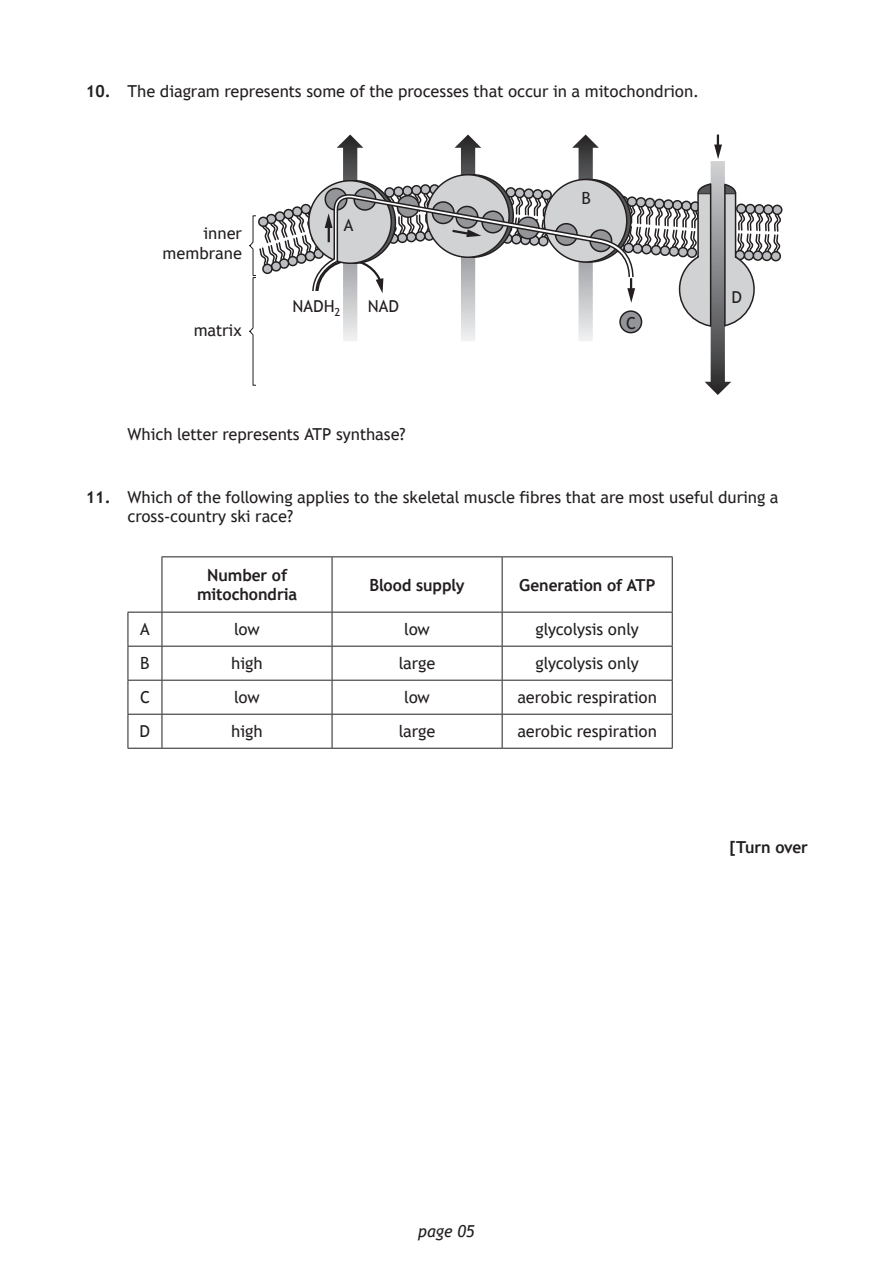
Selectable page text
10. The diagram represents some of the processes that occur in a mitochondrion.

                                             B
                        A
           inner
       membrane

                                                           D
                   NADH   NAD
                       2
                                                  C
          matrix

    Which letter represents ATP synthase?

11. Which of the following applies to the skeletal muscle fibres that are most useful during a
    cross‑country ski race?

           Number of
                          Blood supply  Generation of ATP
          mitochondria
     A        low            low         glycolysis only

     B       high            large       glycolysis only
     C        low            low        aerobic respiration

     D       high            large      aerobic respiration

                                                           [Turn over

                              page 05
PDF page 6
Question 12Question 13Question 14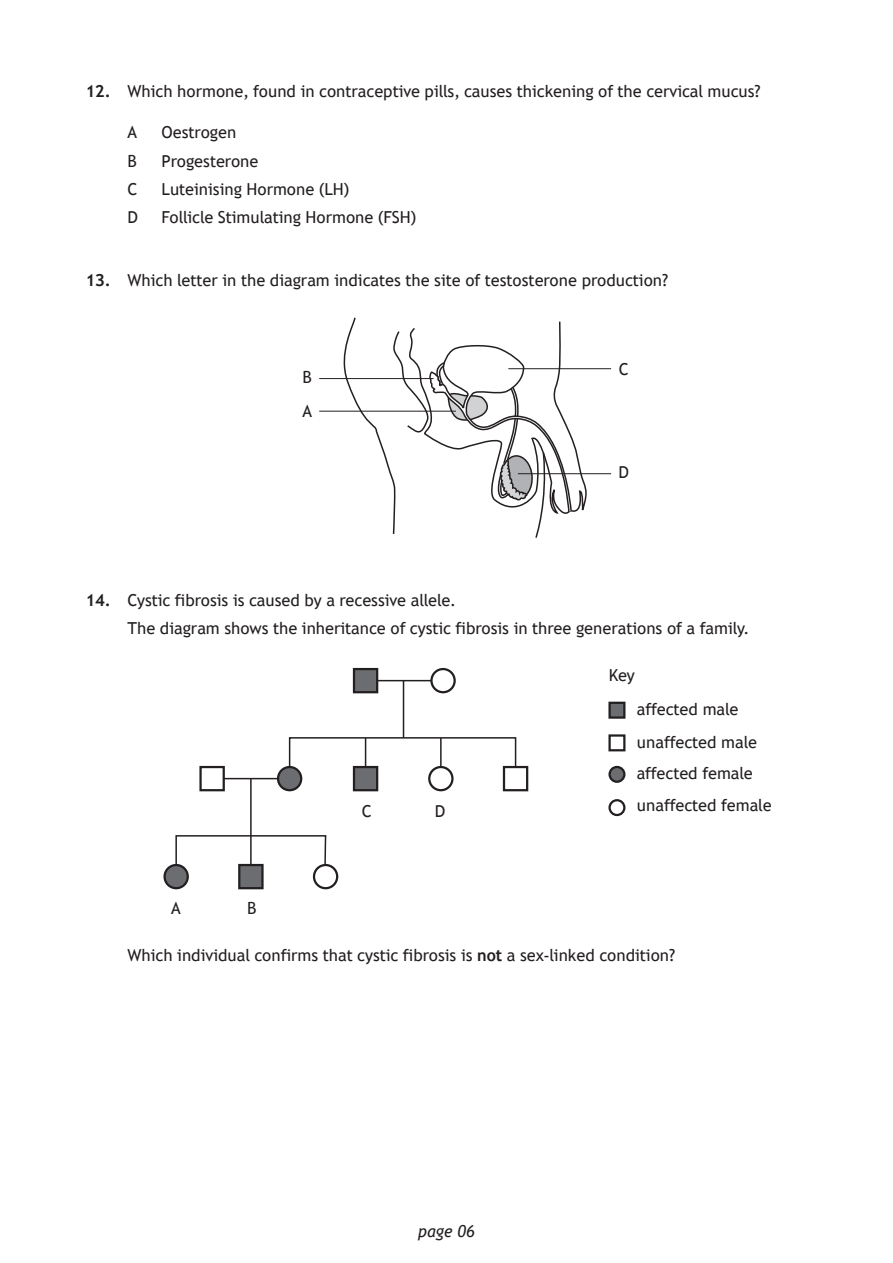
Selectable page text
12. Which hormone, found in contraceptive pills, causes thickening of the cervical mucus?

    A  Oestrogen

    B  Progesterone
    C  Luteinising Hormone (LH)

    D  Follicle Stimulating Hormone (FSH)

13. Which letter in the diagram indicates the site of testosterone production?

                                                 C
                    B
                    A

                                                 D

14. Cystic fibrosis is caused by a recessive allele.

    The diagram shows the inheritance of cystic fibrosis in three generations of a family.

                                                Key

                                                   affected male

                                                   unaffected male
                                                   affected female

                                                   unaffected female
                         C      D

        A      B

    Which individual confirms that cystic fibrosis is not a sex‑linked condition?

                              page 06
PDF page 7
Question 15Question 16Question 17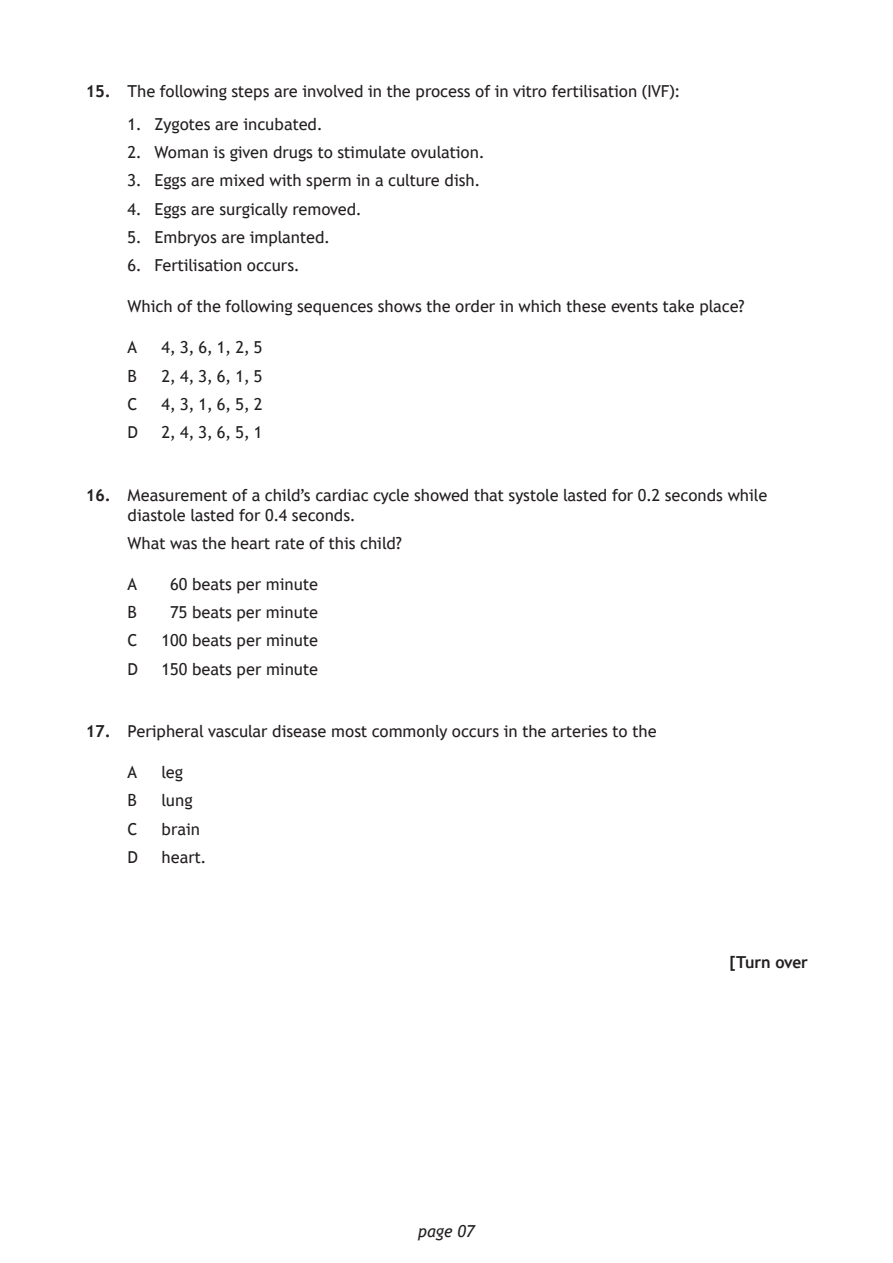
Selectable page text
15. The following steps are involved in the process of in vitro fertilisation (IVF):

    1. Zygotes are incubated.
    2. Woman is given drugs to stimulate ovulation.

    3. Eggs are mixed with sperm in a culture dish.
    4. Eggs are surgically removed.

    5. Embryos are implanted.
    6. Fertilisation occurs.

    Which of the following sequences shows the order in which these events take place?

    A  4, 3, 6, 1, 2, 5

    B  2, 4, 3, 6, 1, 5
    C  4, 3, 1, 6, 5, 2

    D  2, 4, 3, 6, 5, 1

16. Measurement of a child’s cardiac cycle showed that systole lasted for 0.2 seconds while
    diastole lasted for 0.4 seconds.

    What was the heart rate of this child?

    A   60 beats per minute
    B   75 beats per minute

    C  100 beats per minute
    D  150 beats per minute

17. Peripheral vascular disease most commonly occurs in the arteries to the

    A  leg

    B  lung
    C  brain

    D  heart.

                                                           [Turn over

                              page 07
PDF page 8
Question 18Question 19Question 20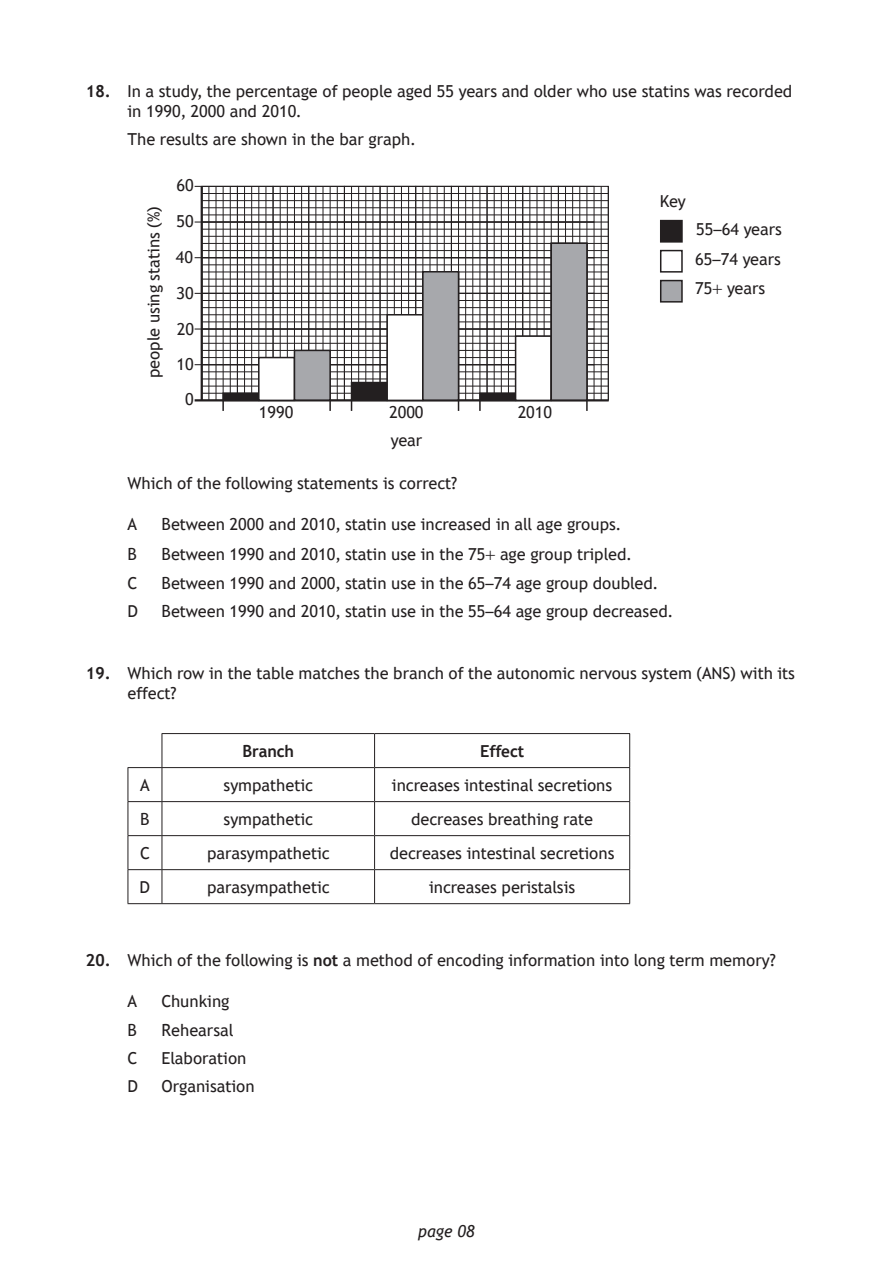
Selectable page text
18. In a study, the percentage of people aged 55 years and older who use statins was recorded
    in 1990, 2000 and 2010.

    The results are shown in the bar graph.

                              page 08
      )%(
      snitats
      gnisu
      elpoep
        60
                                                     Key
        50
                                                        55–64 years
        40                                              65–74 years
        30                                              75+ years
        20
        10
         0
                1990        2000        2010
                            year
    Which of the following statements is correct?
    A  Between 2000 and 2010, statin use increased in all age groups.
    B  Between 1990 and 2010, statin use in the 75+ age group tripled.
    C  Between 1990 and 2000, statin use in the 65–74 age group doubled.
    D  Between 1990 and 2010, statin use in the 55–64 age group decreased.
19. Which row in the table matches the branch of the autonomic nervous system (ANS) with its
    effect?
              Branch                Effect
     A       sympathetic    increases intestinal secretions
     B       sympathetic      decreases breathing rate
     C     parasympathetic  decreases intestinal secretions
     D     parasympathetic     increases peristalsis
20. Which of the following is not a method of encoding information into long term memory?
    A  Chunking
    B  Rehearsal
    C  Elaboration
    D  Organisation
PDF page 9
Question 21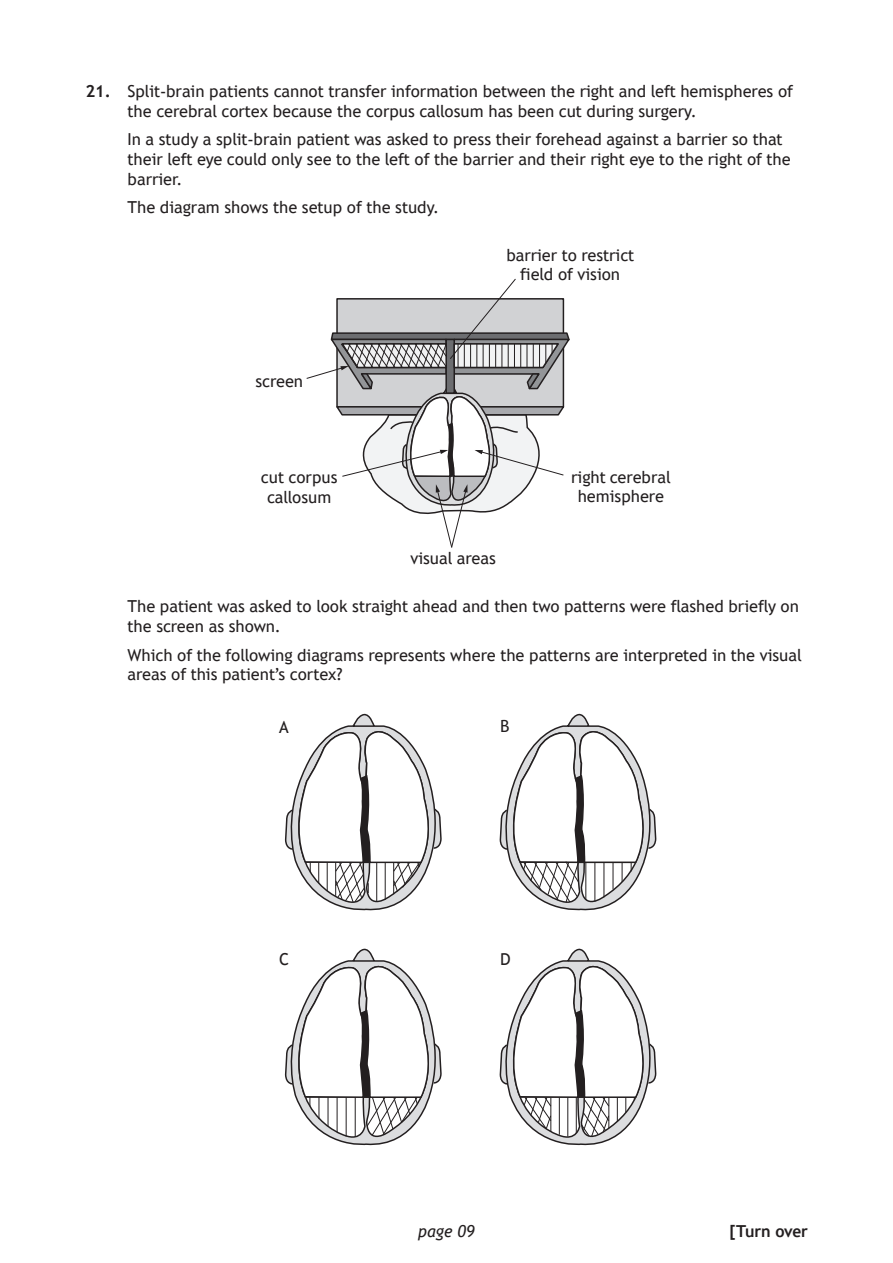
Selectable page text
21. Split‑brain patients cannot transfer information between the right and left hemispheres of
    the cerebral cortex because the corpus callosum has been cut during surgery.

    In a study a split‑brain patient was asked to press their forehead against a barrier so that
    their left eye could only see to the left of the barrier and their right eye to the right of the
    barrier.
    The diagram shows the setup of the study.

                                       barrier to restrict
                                        field of vision

               screen

                cut corpus                   right cerebral
                 callosum                    hemisphere

                              visual areas

    The patient was asked to look straight ahead and then two patterns were flashed briefly on
    the screen as shown.
    Which of the following diagrams represents where the patterns are interpreted in the visual
    areas of this patient’s cortex?

                  A                   B

                  C                   D

                              page 09                      [Turn over
PDF page 10
Question 22Question 23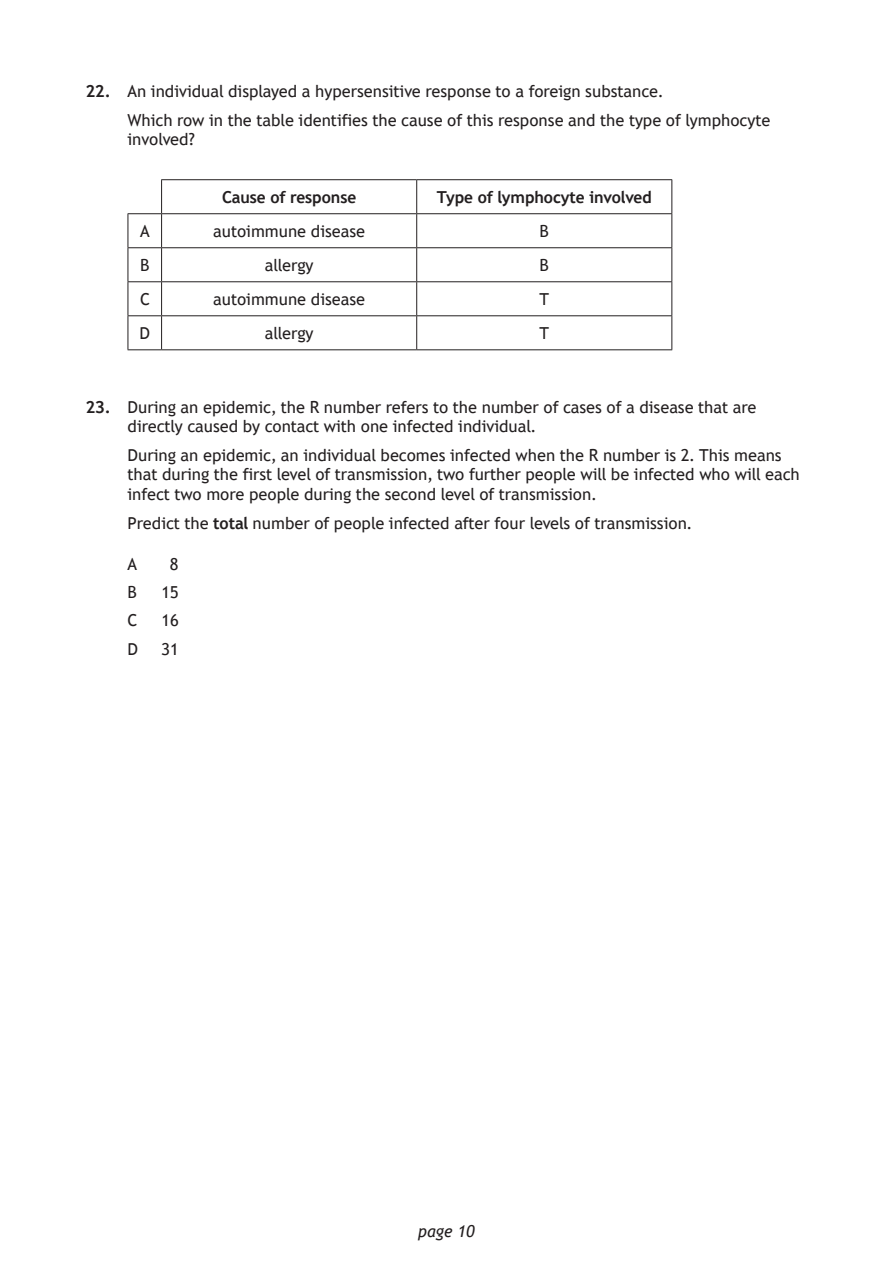
Selectable page text
22. An individual displayed a hypersensitive response to a foreign substance.

    Which row in the table identifies the cause of this response and the type of lymphocyte
    involved?

            Cause of response   Type of lymphocyte involved

     A      autoimmune disease            B
     B          allergy                   B

     C      autoimmune disease            T

     D          allergy                   T

23. During an epidemic, the R number refers to the number of cases of a disease that are
    directly caused by contact with one infected individual.
    During an epidemic, an individual becomes infected when the R number is 2. This means
    that during the first level of transmission, two further people will be infected who will each
    infect two more people during the second level of transmission.
    Predict the total number of people infected after four levels of transmission.

    A   8
    B  15
    C  16

    D  31

                              page 10
PDF page 11
Question 24Question 25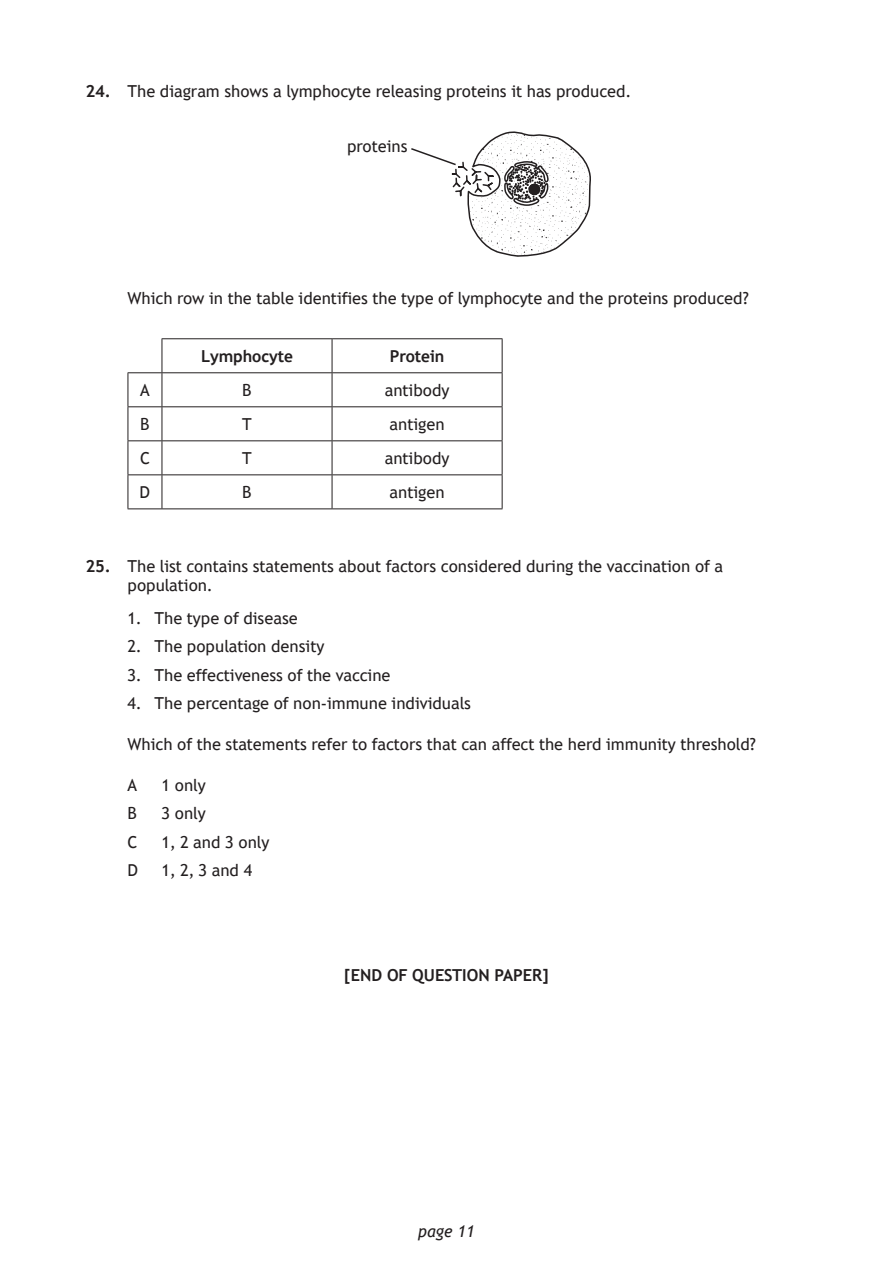
Selectable page text
24. The diagram shows a lymphocyte releasing proteins it has produced.

                        proteins

    Which row in the table identifies the type of lymphocyte and the proteins produced?

          Lymphocyte        Protein

     A        B            antibody
     B        T             antigen

     C        T            antibody

     D        B             antigen

25. The list contains statements about factors considered during the vaccination of a
    population.
    1. The type of disease

    2. The population density
    3. The effectiveness of the vaccine

    4. The percentage of non‑immune individuals

    Which of the statements refer to factors that can affect the herd immunity threshold?

    A  1 only
    B  3 only

    C  1, 2 and 3 only
    D  1, 2, 3 and 4

                        [END OF QUESTION PAPER]

                              page 11
PDF page 12

Selectable page text
SPACE FOR ROUGH WORK

      page 12
PDF page 13

Selectable page text
SPACE FOR ROUGH WORK

      page 13
PDF page 14

Selectable page text
[BLANK PAGE]

DO NOT WRITE ON THIS PAGE

       page 14
PDF page 15

Selectable page text
[BLANK PAGE]

DO NOT WRITE ON THIS PAGE

       page 15
PDF page 16

Selectable page text
[BLANK PAGE]

DO NOT WRITE ON THIS PAGE

       page 16