2025 Advanced Higher Biology - Paper 2 questions
Source: Scottish Qualifications Authority (SQA) / Qualifications Scotland. This is a StemInteract HTML companion, not an official HTML edition. Selectable text is supplied alongside original page images. Use the images or original PDF for equations, powers, fractions, vector notation, tables and diagrams; text extraction cannot fully preserve mathematical layout.
Jump to a question
PDF page 1

Selectable page text
FOR OFFICIAL USE
AH
National
Qualications
Mark
2025
X807/77/01 Biology
Section 1 — Answer grid
and Section 2
TUESDAY, 27 MAY
9:00 AM – 12:00 NOON
*X8077701*
Fill in these boxes and read what is printed below.
Full name of centre Town
Forename(s) Surname Number of seat
Date of birth
Day Month Year Scottish candidate number
Total marks — 100
SECTION 1 — 20 marks
Attempt ALL questions.
Instructions for the completion of Section 1 are given on page 02.
SECTION 2 — 80 marks
Attempt ALL questions.
A supplementary sheet for question 1 is enclosed inside the front cover of this question paper.
Question 12 contains a choice.
Write your answers clearly in the spaces provided in this booklet. Additional space for answers
and rough work is provided at the end of this booklet. If you use this space you must clearly
identify the question number you are attempting. Any rough work must be written in this
booklet. Score through your rough work when you have written your final copy.
Use blue or black ink.
Before leaving the examination room you must give this booklet to the
Invigilator; if you do not, you may lose all the marks for this paper.
©
*X807770101*
A/PBPDF page 2

Selectable page text
SECTION 1 — 20 marks

The questions for Section 1 are contained in the question paper X807/77/02.

Read these and record your answers on the answer grid on page 03 opposite.
Use blue or black ink. Do NOT use gel pens or pencil.

 1. The answer to each question is either A, B, C or D. Decide what your answer is, then fill in
    the appropriate bubble (see sample question below).

 2. There is only one correct answer to each question.

 3. Any rough working should be done on the additional space for answers and rough work at
    the end of this booklet.

Sample question
The thigh bone is called the

    A  humerus
    B  femur

    C  tibia
    D  fibula.

The correct answer is B — femur. The answer B bubble has been clearly filled in (see below).

  A    B    C     D

Changing an answer

If you decide to change your answer, cancel your first answer by putting a cross through it (see
below) and fill in the answer you want. The answer below has been changed to D.

  A    B    C     D

If you then decide to change back to an answer you have already scored out, put a tick (✓) to the
right of the answer you want, as shown below:

  A    B    C     D         A    B    C    D

                      or

                       *X807770102*

                              page 02
PDF page 3
Selectable page text
SECTION 1 — Answer grid

                          *OBJ20AD1*

     A     B    C    D

 1

 2

 3

 4

 5

 6

 7

 8

 9

10

11

12

13

14

15

16

17

18

19

20

 *X807770103*

        page 03                 [Turn over
PDF page 4

Selectable page text
[BLANK PAGE]

DO NOT WRITE ON THIS PAGE

*X807770104*

       page 04
PDF page 5

Selectable page text
[Turn over for next question

DO NOT WRITE ON THIS PAGE

*X807770105*

       page 05
PDF page 6
Paper 2, Question 1
Selectable page text
MARKS _{W}^{D}_{R}^{O}_{I} _{T}^{N}OT
                                                                   E IN
                                                                  THIS
                                                                 MARGIN
                      SECTION 2 — 80 marks
                      Attempt ALL questions
                   Question 12 contains a choice

1. Read through the supplementary sheet for question 1 before attempting this
   question.

   (a) Only the male, orange‑clawed fiddler crab has an enlarged claw.

        (i) State the term used to describe the physical differences between the
          male and the female.                                1

       (ii) Explain how these differences arise through male‑male rivalry. 1

   (b) Refer to Figure 1A and Figure 1B.
      Compare the morphology of the dactyl in a regenerated claw to that of an
      original crab claw.                                     1

   (c) Refer to Figure 2A and Figure 2B.
      Fiddler crabs are unable to visually distinguish between original and
      regenerated claws; during the signalling stages of aggressive contests,
      individuals with regenerated claws are equally successful.

        (i) State one conclusion that can be drawn from Figure 2A regarding claw
          size.                                               1

                      *X807770106*

                             page 06
PDF page 7

Selectable page text
MARKS _{W}^{D}_{R}^{O}_{I} _{T}^{N}OT
                                                                   E IN
                                                                  THIS
                                                                 MARGIN
1. (c) (continued)
       (ii) Figure 2B shows an increase in claw muscle mass as claw size increases
          for both original and regenerated claws.
          Describe how this trend differs between the original and regenerated
          claws.                                              1

       (iii) It can be concluded that the regenerated claw in this species is a
          dishonest signal to rival males.

          Explain how the data support this conclusion.       1

   (d) Refer to Figure 3A and Figure 3B.

      A study concluded that investing in high quality signals, which act as effective
      weapons during combat, is metabolically costly.
        (i) Explain why the data in Figure 3A and Figure 3B support this conclusion. 2

       (ii) Suggest why it may be advantageous for males that lose their claw during
          combat to regenerate a physically weaker claw.      1

                                                     [Turn over

                      *X807770107*

                             page 07
PDF page 8
Paper 2, Question 2
Selectable page text
MARKS _{W}^{D}_{R}^{O}_{I} _{T}^{N}OT
                                                                   E IN
                                                                  THIS
                                                                 MARGIN
2. An assay is an investigative procedure used in the laboratory.
   Students carried out a colorimetric assay to determine the concentration of a
   protein in a solution using a colorimeter. Initially, the colorimeter was used to
   gather data about known concentrations of the protein in solution.
   The results are shown in the table.

                            Absorbance reading at 540 nm
        Concentration of
                          1           2           3
        protein (mol L⁻¹)
             0.2         0.11        0.10        0.09

             0.4         0.19        0.21        0.21

             0.5         0.24        0.23        0.25

             0.8         0.40        0.41        0.42
             1.0         0.57        0.56        0.58

   (a) State the type of dilution series used during the investigation. 1

   (b) Before each value was obtained, the students used a blank as part of their
      experimental method.

      Explain the purpose of a blank when using a colorimeter. 1

   (c) As part of the evaluation of their results, the students should consider the
      precision of the data.

      Indicate whether the data are precise or not precise by ticking (✓) one box.
      Justify your selection.                                 1

      Precise            Not precise

      Justification

                      *X807770108*

                             page 08
PDF page 9

Selectable page text
MARKS _{W}^{D}_{R}^{O}_{I} _{T}^{N}OT
                                                                   E IN
                                                                  THIS
                                                                 MARGIN
2. (continued)
   (d) Describe how the students could use the data they have gathered to determine
      the protein concentration of an unknown solution.       2

   (e) Colorimeters can also be set to measure percentage transmission.
      When a colorimeter is used to record the percentage transmission of a
      suspension of cells, what property of the suspension is being measured? 1

                                                     [Turn over

                      *X807770109*

                             page 09
PDF page 10
Paper 2, Question 3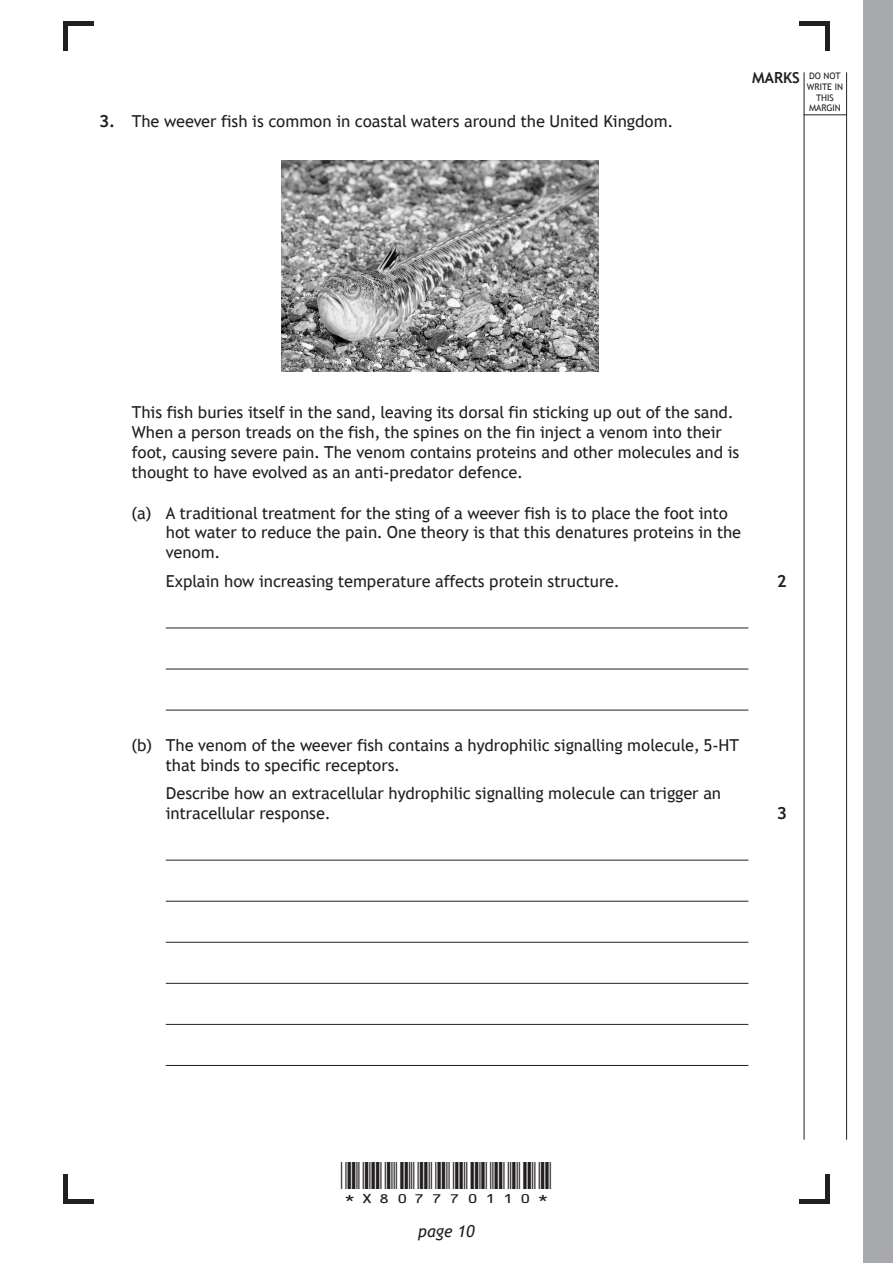
Selectable page text
MARKS _{W}^{D}_{R}^{O}_{I} _{T}^{N}OT
                                                                   E IN
                                                                  THIS
                                                                 MARGIN
3. The weever fish is common in coastal waters around the United Kingdom.

   This fish buries itself in the sand, leaving its dorsal fin sticking up out of the sand.
   When a person treads on the fish, the spines on the fin inject a venom into their
   foot, causing severe pain. The venom contains proteins and other molecules and is
   thought to have evolved as an anti‑predator defence.

   (a) A traditional treatment for the sting of a weever fish is to place the foot into
      hot water to reduce the pain. One theory is that this denatures proteins in the
      venom.
      Explain how increasing temperature affects protein structure. 2

   (b) The venom of the weever fish contains a hydrophilic signalling molecule, 5‑HT
      that binds to specific receptors.
      Describe how an extracellular hydrophilic signalling molecule can trigger an
      intracellular response.                                 3

                      *X807770110*

                             page 10
PDF page 11

Selectable page text
MARKS _{W}^{D}_{R}^{O}_{I} _{T}^{N}OT
                                                                   E IN
                                                                  THIS
                                                                 MARGIN
3. (continued)
   (c) It was discovered that for a mammal, a lethal dose of the weever fish venom
      protein is 1.8 µg per gram of mammal body mass.
      Calculate the number of milligrams of venom protein needed to kill a mammal
      with a body mass of 35 kg.                              1
      Space for calculation

                                              ��������������������������� mg

                                                     [Turn over

                      *X807770111*

                             page 11
PDF page 12
Paper 2, Question 4
Selectable page text
MARKS _{W}^{D}_{R}^{O}_{I} _{T}^{N}OT
                                                                   E IN
                                                                  THIS
                                                                 MARGIN
4. Cytidine triphosphate synthetase (CTPS) is an enzyme required for the synthesis of
   the nucleotide cytidine triphosphate (CTP). CTP is an important precursor for RNA
   and DNA synthesis. CTPS is inhibited by its product CTP.
   In humans, there are two different forms of the CTPS enzyme, coded for by two
   different genes, CTPS1 and CTPS2. These genes are expressed differently in
   different tissues.
   (a)  (i) State the term that describes the entire set of proteins expressed by a
          genome.                                             1

       (ii) Suggest one factor that might determine which CTPS gene is expressed. 1

   (b) Both CTPS1 and CTPS2 are expressed in normal lymphocytes.

        (i) The expression of the CTPS1 gene is low in resting lymphocytes but
          significantly increases when the lymphocyte is selected on exposure to a
          pathogen.

          Explain why the nucleotide CTP must be produced in high quantities in
          lymphocytes exposed to pathogens.                   1

       (ii) Inhibiting the CTPS1 form of the enzyme is a focus for researchers
          investigating autoimmune conditions where lymphocytes are selected by
          the body’s own cells.
          CTPS1 has been found to be less sensitive to feedback inhibition by CTP
          than CTPS2. This is thought to be due to a single amino acid substitution
          in a CTP binding site on the enzyme.

          Suggest why developing a specific inhibitor to interact with this CTP
          binding site on CTPS1 could be effective in treating autoimmune disease. 1

                      *X807770112*

                             page 12
PDF page 13

Selectable page text
MARKS _{W}^{D}_{R}^{O}_{I} _{T}^{N}OT
                                                                   E IN
                                                                  THIS
                                                                 MARGIN
4. (continued)
   (c) The gene for CTPS also occurs in bacteria, which are used to manufacture
      nucleotides for research purposes and certain medical treatments.
      The figure shows the effect of CTP concentration on the activity of CTPS for a
      wild and a mutated strain of a bacterium.

             4.0

                                     wild strain
                                     mutated strain
             3.0

             2.0

             1.0

             0.0
                  0       1      2      3       4      5
                             CTP concentration (mM)

                      *X807770113*

                             page 13
           )stinu(
           ytivitca
           SPTC
        (i) Describe the effect of increasing CTP concentration on CTPS activity in
          the wild strain of the bacterium.                   1
       (ii) Use the data at a single CTP concentration to justify whether the
          mutation shown is likely to be an advantage or a disadvantage in the
          commercial production of CTP.                       2
                                                     [Turn over
PDF page 14
Paper 2, Question 5
Selectable page text
MARKS _{W}^{D}_{R}^{O}_{I} _{T}^{N}OT
                                                                   E IN
                                                                  THIS
                                                                  ARGIN
5. Describe the control of protein activity by the reversible binding of phosphate. 5 ^{M}

                      *X807770114*

                             page 14
PDF page 15
Paper 2, Question 6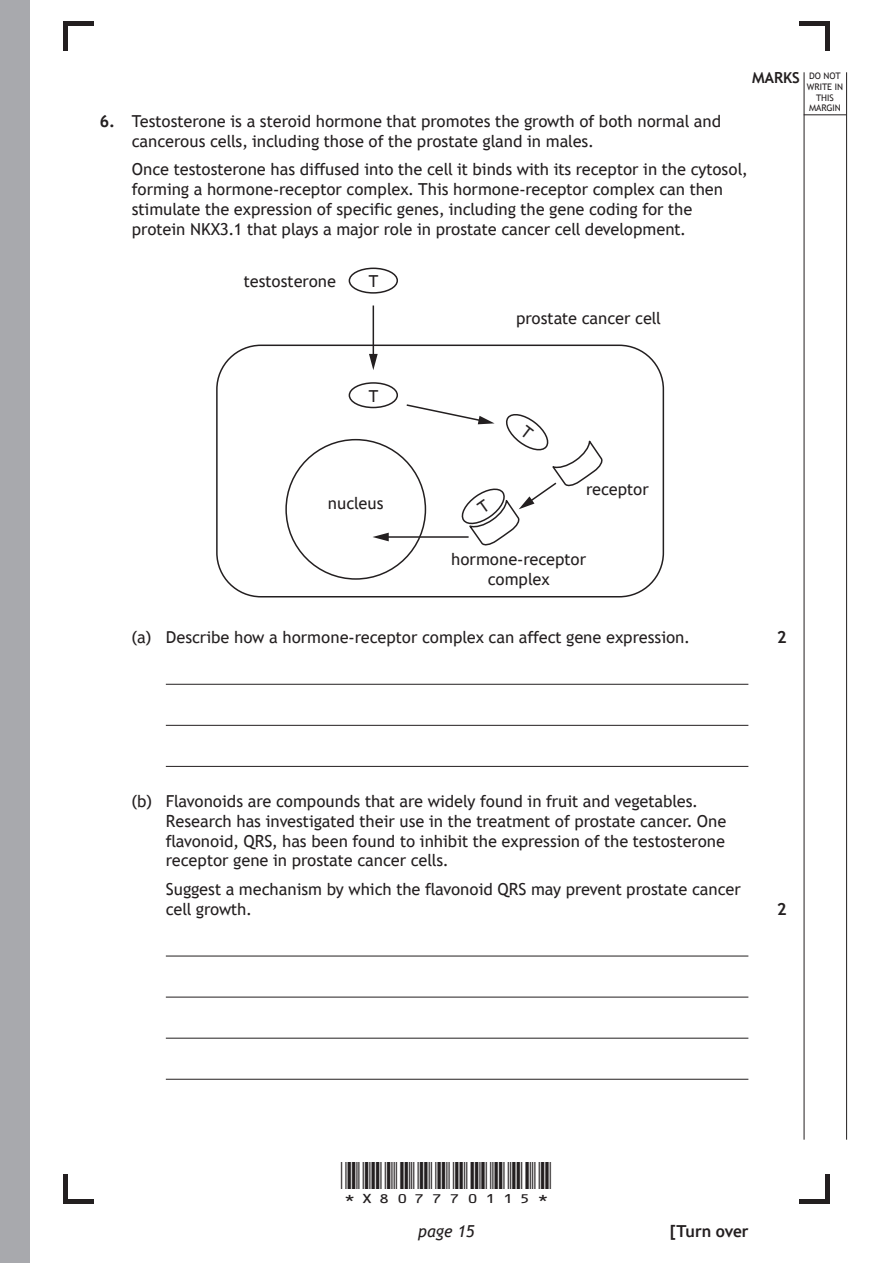
Selectable page text
MARKS _{W}^{D}_{R}^{O}_{I} _{T}^{N}OT
                                                                   E IN
                                                                  THIS
                                                                 MARGIN
6. Testosterone is a steroid hormone that promotes the growth of both normal and
   cancerous cells, including those of the prostate gland in males.
   Once testosterone has diffused into the cell it binds with its receptor in the cytosol,
   forming a hormone‑receptor complex. This hormone‑receptor complex can then
   stimulate the expression of specific genes, including the gene coding for the
   protein NKX3.1 that plays a major role in prostate cancer cell development.
             testosterone T

                                      prostate cancer cell

                         T

                                       T

                                             receptor
                     nucleus       T

                                hormone-receptor
                                    complex

   (a) Describe how a hormone‑receptor complex can affect gene expression. 2

   (b) Flavonoids are compounds that are widely found in fruit and vegetables.
      Research has investigated their use in the treatment of prostate cancer. One
      flavonoid, QRS, has been found to inhibit the expression of the testosterone
      receptor gene in prostate cancer cells.
      Suggest a mechanism by which the flavonoid QRS may prevent prostate cancer
      cell growth.                                            2

                      *X807770115*

                             page 15                 [Turn over
PDF page 16

Selectable page text
MARKS _{W}^{D}_{R}^{O}_{I} _{T}^{N}OT
                                                                   E IN
                                                                  THIS
                                                                 MARGIN
6. (continued)
   (c) Testosterone has multiple roles in the body.
      Explain how different cell types show a tissue‑specific response to
      testosterone.                                           1

   (d) Other than testosterone, name one steroid hormone.     1

                      *X807770116*

                             page 16
PDF page 17
Paper 2, Question 7
Selectable page text
MARKS _{W}^{D}_{R}^{O}_{I} _{T}^{N}OT
                                                                   E IN
                                                                  THIS
                                                                 MARGIN
7. Milkweeds are plants that get their name from the white sap they produce when
   damaged. This sap contains toxic chemicals called cardenolides. Cardenolides can
   cause cardiac arrest in vertebrates if consumed in sufficient quantity.

   (a) Cardenolides cause cardiac arrest by binding to and blocking the activity of the
      sodium‑potassium pump in heart muscle cells.

        (i) The sodium‑potassium pump uses energy from the hydrolysis of ATP to
          transport ions against a steep concentration gradient.
          Describe the role of conformational change in altering the affinity of the
          sodium‑potassium pump for sodium and potassium ions. 2

       (ii) Predict what effect cardenolides would have on the concentration of
          sodium and potassium ions inside the heart muscle cells. 1

                                                     [Turn over

                      *X807770117*

                             page 17
PDF page 18
Selectable page text
MARKS _{W}^{D}_{R}^{O}_{I} _{T}^{N}OT
                                                                   E IN
                                                                  THIS
                                                                 MARGIN
7. (continued)
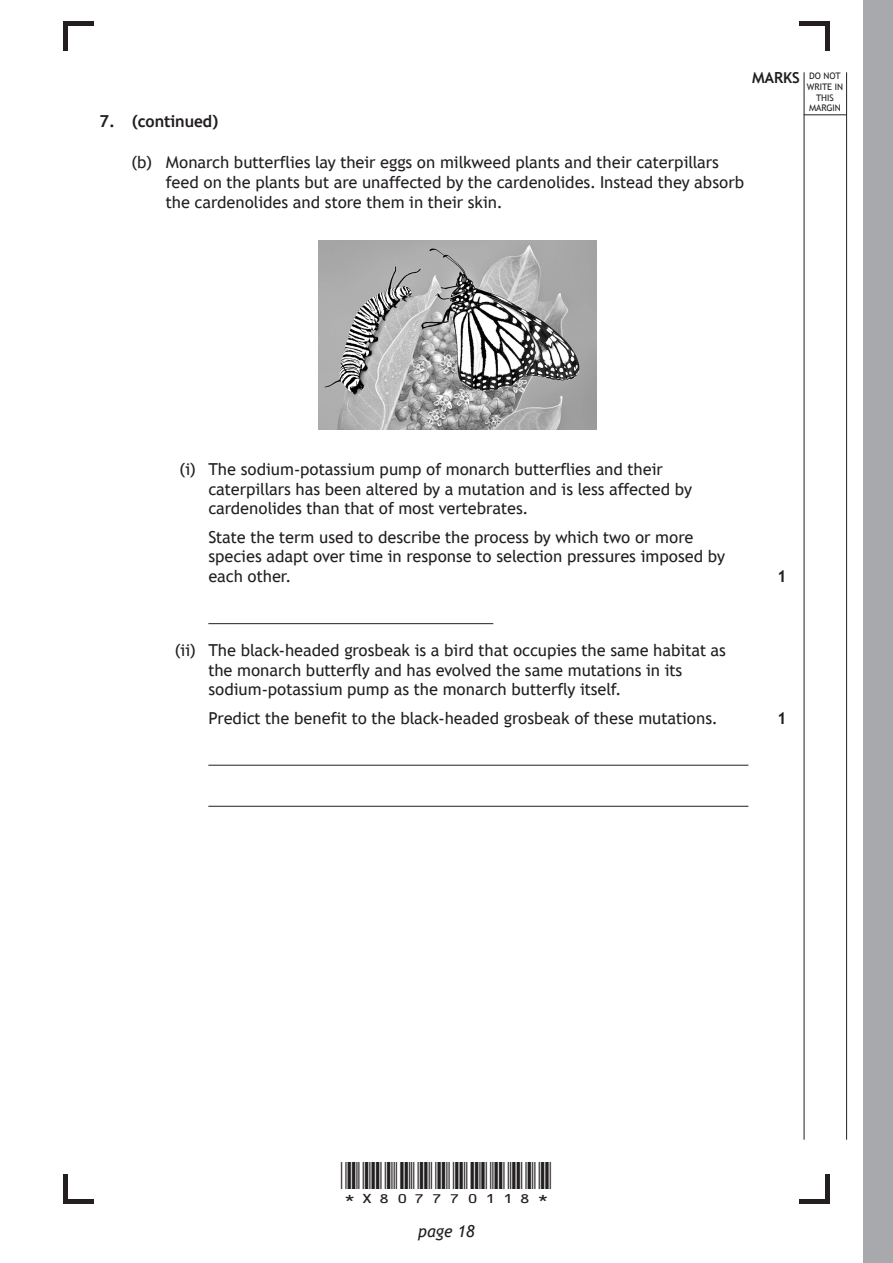
   (b) Monarch butterflies lay their eggs on milkweed plants and their caterpillars
      feed on the plants but are unaffected by the cardenolides. Instead they absorb
      the cardenolides and store them in their skin.

        (i) The sodium‑potassium pump of monarch butterflies and their
          caterpillars has been altered by a mutation and is less affected by
          cardenolides than that of most vertebrates.
          State the term used to describe the process by which two or more
          species adapt over time in response to selection pressures imposed by
          each other.                                         1

       (ii) The black‑headed grosbeak is a bird that occupies the same habitat as
          the monarch butterfly and has evolved the same mutations in its
          sodium‑potassium pump as the monarch butterfly itself.
          Predict the benefit to the black‑headed grosbeak of these mutations. 1

                      *X807770118*

                             page 18
PDF page 19
Paper 2, Question 8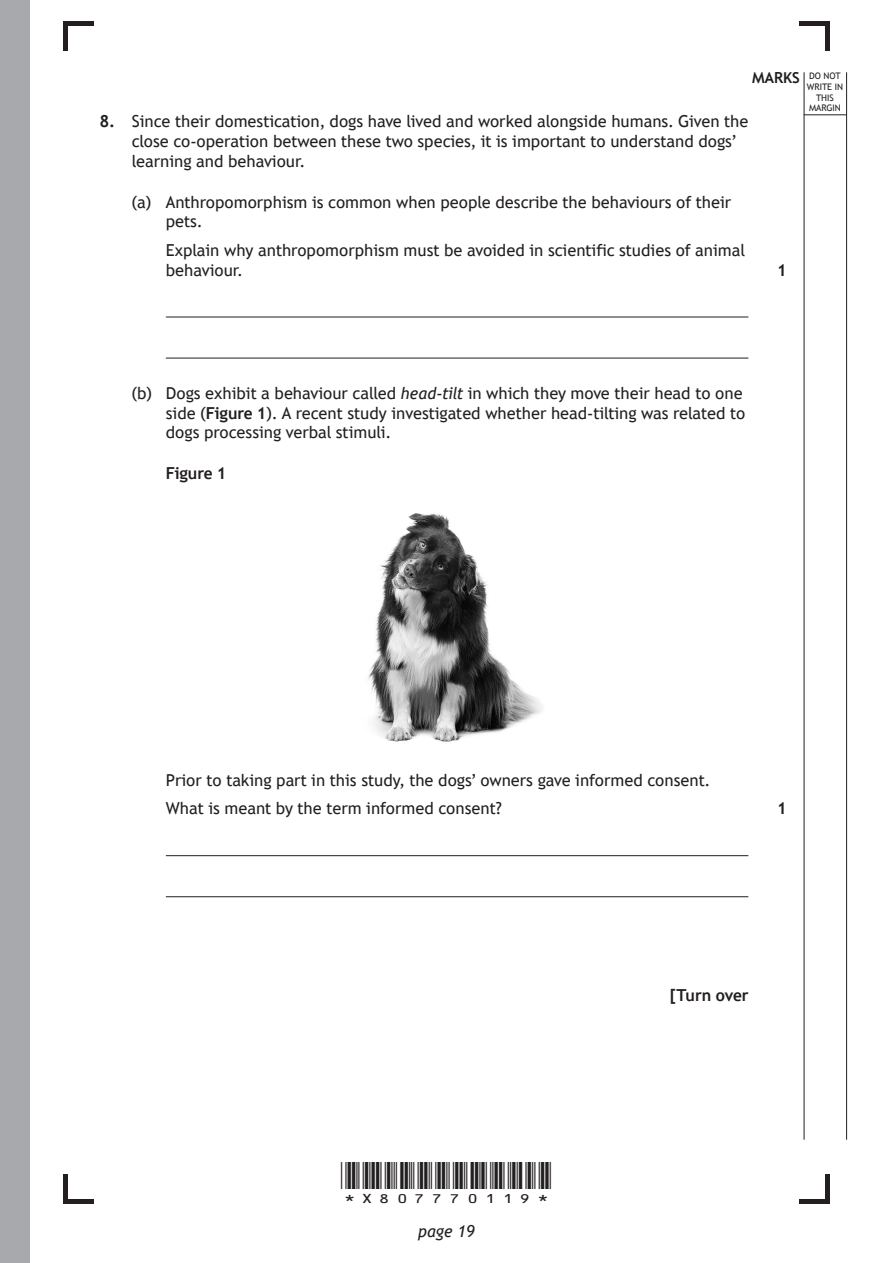
Selectable page text
MARKS _{W}^{D}_{R}^{O}_{I} _{T}^{N}OT
                                                                   E IN
                                                                  THIS
                                                                 MARGIN
8. Since their domestication, dogs have lived and worked alongside humans. Given the
   close co‑operation between these two species, it is important to understand dogs’
   learning and behaviour.
   (a) Anthropomorphism is common when people describe the behaviours of their
      pets.
      Explain why anthropomorphism must be avoided in scientific studies of animal
      behaviour.                                              1

   (b) Dogs exhibit a behaviour called head‑tilt in which they move their head to one
      side (Figure 1). A recent study investigated whether head‑tilting was related to
      dogs processing verbal stimuli.

      Figure 1

      Prior to taking part in this study, the dogs’ owners gave informed consent.
      What is meant by the term informed consent?             1

                                                     [Turn over

                      *X807770119*

                             page 19
PDF page 20

Selectable page text
MARKS _{W}^{D}_{R}^{O}_{I} _{T}^{N}OT
                                                                   E IN
                                                                  THIS
                                                                 MARGIN
8. (continued)
   A few dogs can rapidly learn the names of objects such as toys; these dogs are
   referred to as gifted word learner (GWL) dogs. This study compared the head‑tilting
   behaviour of GWL and non‑GWL dogs when they were listening to humans asking
   them to fetch familiar toys.
   40 dogs (7 GWL and 33 non‑GWL dogs) were given three months of training with the
   toys to be used in subsequent tests. The dogs were trained by their owners, all of
   whom received the same training protocol and weekly sessions with a dog trainer.
   During the tests:
   •  the owner asked the dog to fetch one of the toys the dog had been familiarised
      with by saying the name of the toy

   •  the dogs were sitting or standing in front of the owner; the toys were in an
      adjacent room
   •  upon hearing the owner’s request, the dogs entered this room and chose a toy.
      The same toys were used throughout the study

   •  the dogs were tested monthly; each test consisted of 12 trials per dog
   •  for every trial, the display or absence of head‑tilt was noted from when the
      owner started to speak to when the dog left to fetch a toy.

   (c)  (i) During tests it was the dogs’ owners who spoke the names of the toys.

          Indicate whether this can be considered a positive or a negative aspect
          of the experimental design.
          Justify your choice.                                1

          Aspect

          Justification

       (ii) During each trial, the position of the owner relative to the dog when they
          spoke was recorded.

          Explain why it was important to take account of the position of the
          owner when speaking.                                1

                      *X807770120*

                             page 20
PDF page 21
Selectable page text
8. (continued)                                              MARKS _{W}^{D}_{R}^{O}_{I} _{T}^{N}OT
                                                                   E IN
                                                                  THIS
                                                                 MARGIN
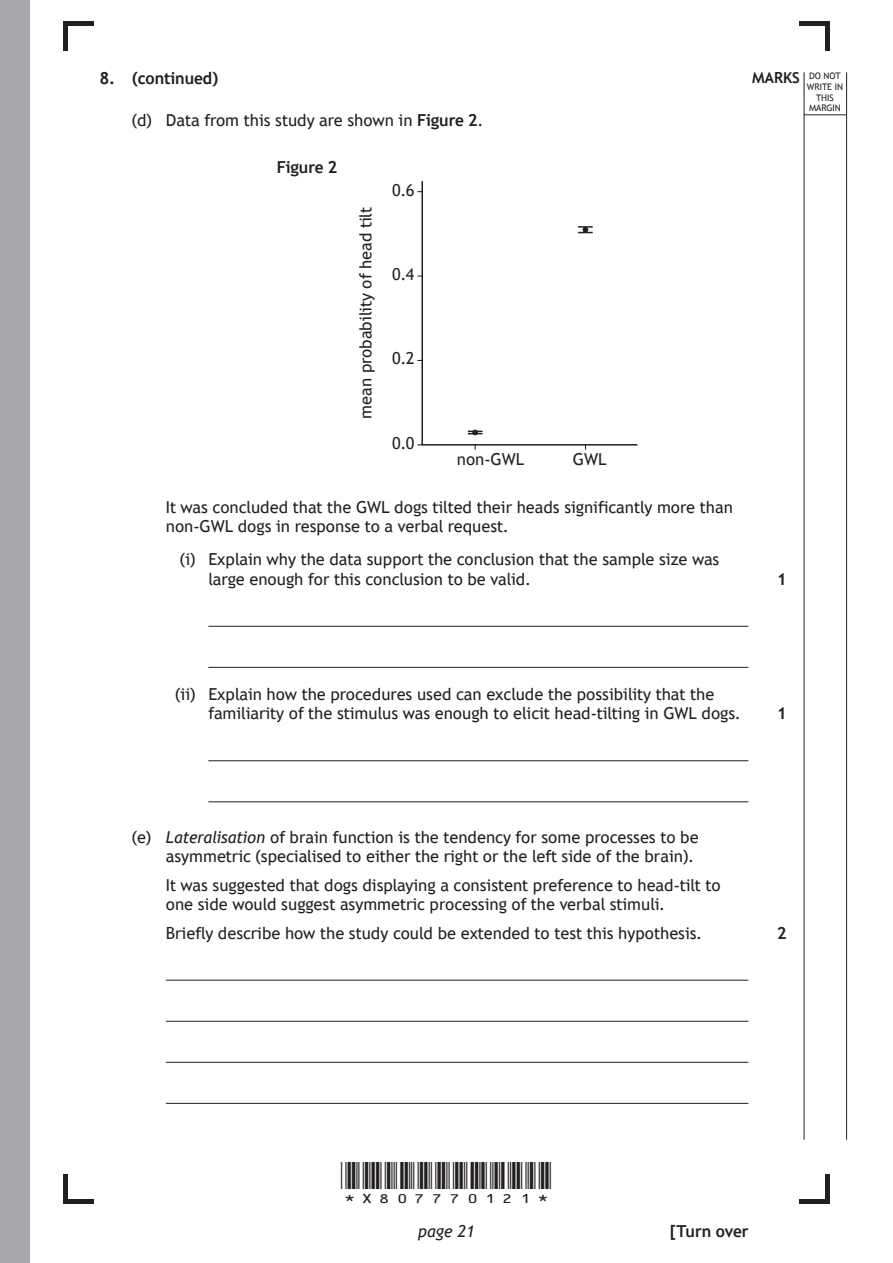
   (d) Data from this study are shown in Figure 2.

                      *X807770121*

                             page 21
                        tlit
                        daeh
                        fo
                        ytilibaborp
                        naem
                Figure 2
                           0.6
                           0.4
                           0.2
                           0.0
                                 non-GWL    GWL
      It was concluded that the GWL dogs tilted their heads significantly more than
      non‑GWL dogs in response to a verbal request.
        (i) Explain why the data support the conclusion that the sample size was
          large enough for this conclusion to be valid.       1
       (ii) Explain how the procedures used can exclude the possibility that the
          familiarity of the stimulus was enough to elicit head‑tilting in GWL dogs. 1
   (e) Lateralisation of brain function is the tendency for some processes to be
      asymmetric (specialised to either the right or the left side of the brain).
      It was suggested that dogs displaying a consistent preference to head‑tilt to
      one side would suggest asymmetric processing of the verbal stimuli.
      Briefly describe how the study could be extended to test this hypothesis. 2
                                                     [Turn over
PDF page 22
Paper 2, Question 9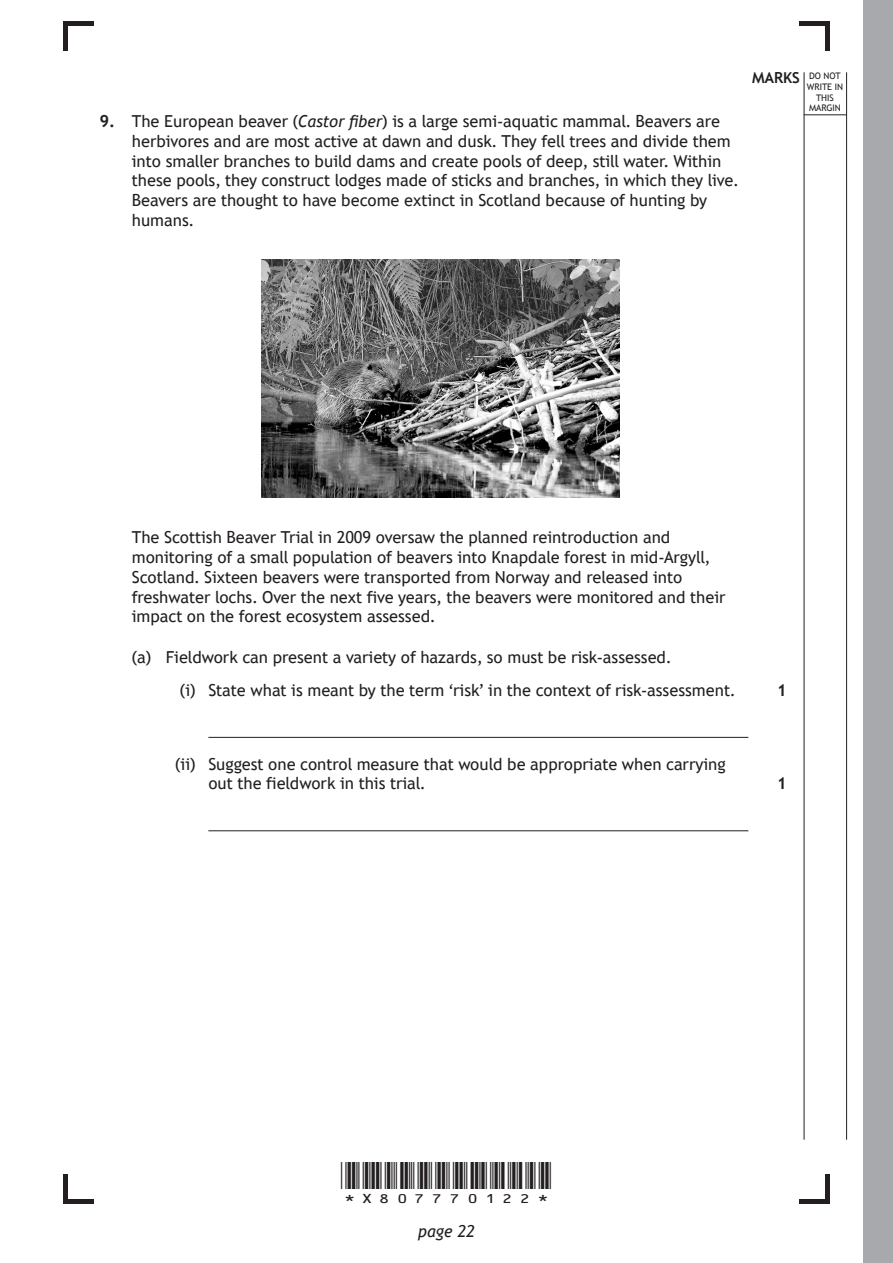
Selectable page text
MARKS _{W}^{D}_{R}^{O}_{I} _{T}^{N}OT
                                                                   E IN
                                                                  THIS
                                                                 MARGIN
9. The European beaver (Castor fiber) is a large semi‑aquatic mammal. Beavers are
   herbivores and are most active at dawn and dusk. They fell trees and divide them
   into smaller branches to build dams and create pools of deep, still water. Within
   these pools, they construct lodges made of sticks and branches, in which they live.
   Beavers are thought to have become extinct in Scotland because of hunting by
   humans.

   The Scottish Beaver Trial in 2009 oversaw the planned reintroduction and
   monitoring of a small population of beavers into Knapdale forest in mid‑Argyll,
   Scotland. Sixteen beavers were transported from Norway and released into
   freshwater lochs. Over the next five years, the beavers were monitored and their
   impact on the forest ecosystem assessed.

   (a) Fieldwork can present a variety of hazards, so must be risk‑assessed.

        (i) State what is meant by the term ‘risk’ in the context of risk‑assessment. 1

       (ii) Suggest one control measure that would be appropriate when carrying
          out the fieldwork in this trial.                    1

                      *X807770122*

                             page 22
PDF page 23
Selectable page text
MARKS _{W}^{D}_{R}^{O}_{I} _{T}^{N}OT
                                                                   E IN
                                                                  THIS
                                                                 MARGIN
9. (continued)
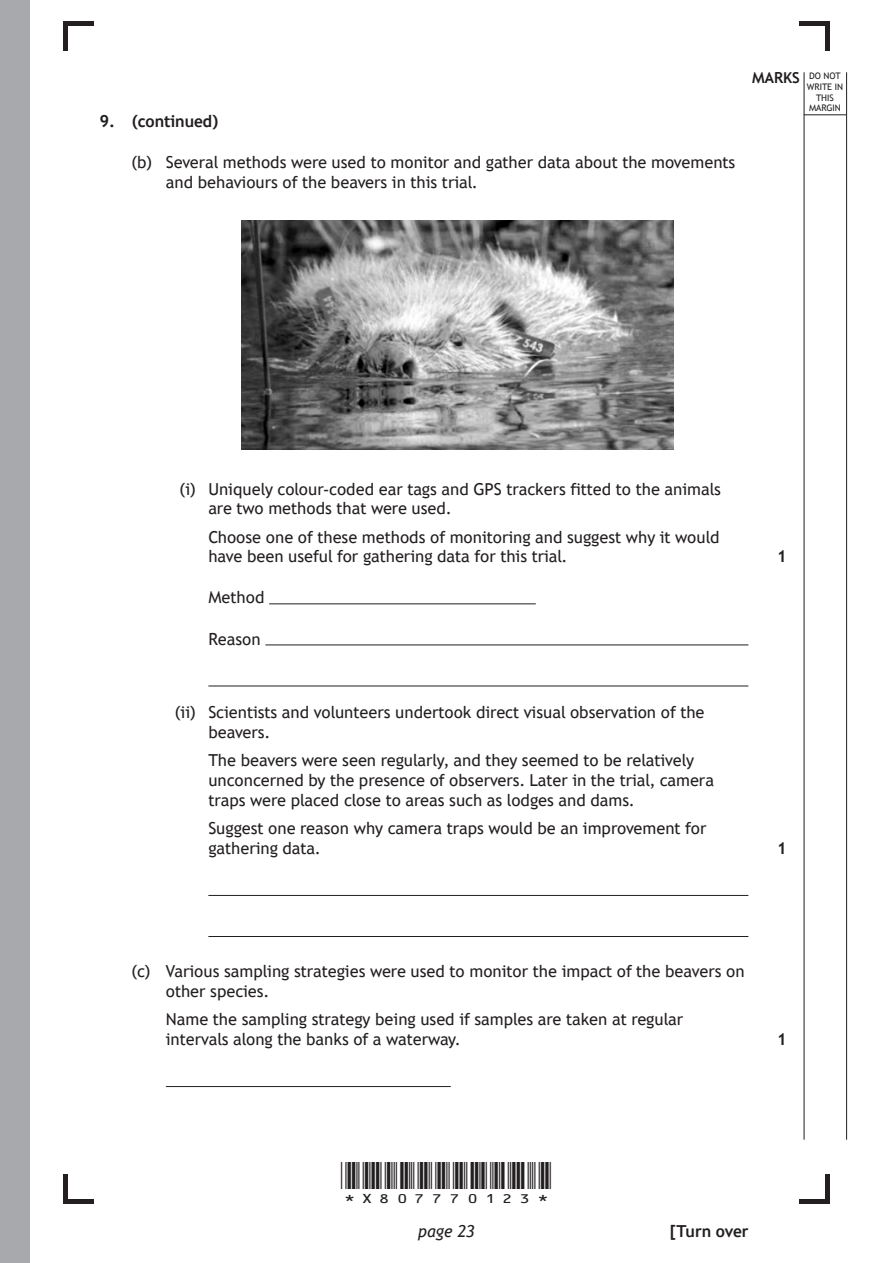
   (b) Several methods were used to monitor and gather data about the movements
      and behaviours of the beavers in this trial.

        (i) Uniquely colour‑coded ear tags and GPS trackers fitted to the animals
          are two methods that were used.
          Choose one of these methods of monitoring and suggest why it would
          have been useful for gathering data for this trial. 1

          Method

          Reason

       (ii) Scientists and volunteers undertook direct visual observation of the
          beavers.

          The beavers were seen regularly, and they seemed to be relatively
          unconcerned by the presence of observers. Later in the trial, camera
          traps were placed close to areas such as lodges and dams.
          Suggest one reason why camera traps would be an improvement for
          gathering data.                                     1

   (c) Various sampling strategies were used to monitor the impact of the beavers on
      other species.

      Name the sampling strategy being used if samples are taken at regular
      intervals along the banks of a waterway.                1

                      *X807770123*

                             page 23                 [Turn over
PDF page 24

Selectable page text
MARKS _{W}^{D}_{R}^{O}_{I} _{T}^{N}OT
                                                                   E IN
                                                                  THIS
                                                                 MARGIN
9. (continued)
   (d) In 2017, a second project was set up to reinforce the Knapdale beaver
      population with beavers from a population in Tayside, which had been
      unofficially released. The Tayside beavers were from a population that is
      thought to have originated in a region of Germany.
      Inbreeding (matings between closely‑related individuals) is a potential issue in
      small populations as it affects genetic diversity. One measure of genetic
      diversity is heterozygosity, which indicates the proportion of genes having two
      different alleles.
      The table contains data about the heterozygosity of the Knapdale population
      before and after reinforcement with the Tayside beavers.

                                     Heterozygosity

                Before reinforcement    0.05
                After reinforcement     0.18

      Suggest how the change in heterozygosity following reinforcement is important
      for the long‑term future of the beaver population in Knapdale. 2

                      *X807770124*

                             page 24
PDF page 25
Paper 2, Question 10
Selectable page text
MARKS _{W}^{D}_{R}^{O}_{I} _{T}^{N}OT
                                                                    E IN
                                                                   THIS
                                                                  MARGIN
10. Most evolutionary changes in humans occur as a result of small changes in the
    frequencies of many alleles that together influence the phenotype being selected
    for. However, new allele patterns can sometimes emerge when strong selection
    pressure increases a single allele’s frequency in a population from low to high over
    a relatively short period of time; these changes are termed a selective sweep.
    In humans, the milk sugar lactose is digested by the enzyme lactase. This enzyme is
    produced by intestinal cells and is encoded by the lactase (LCT) gene.
    Most mammals cannot utilise lactose after infancy as the expression of LCT stops
    after weaning. However, some human populations have a high proportion of adults
    able to digest lactose. This ability to utilise lactose, lactase persistence, is inherited,
    and individuals who cannot digest lactose during adulthood are described as being
    lactase non‑persistent. Lactase persistence is thought to be the result of a selective
    sweep.
    (a) Lactase persistence appears to correlate with dairy farming providing fresh
       milk for consumption by adults, which happened in several cultures over the
       last 10 000 years.

       Suggest how selection could have brought about a selective sweep at the LCT
       gene.                                                   2

    (b) Scientists studying selective sweep can use genome sequence data to detect
       possible examples. This is being helped by large databases of ancient DNA
       (aDNA) sequences, which are rapidly becoming available.

       Explain how aDNA databases could be used to identify a selective sweep. 1

                                                      [Turn over

                       *X807770125*

                              page 25
PDF page 26

Selectable page text
MARKS _{W}^{D}_{R}^{O}_{I} _{T}^{N}OT
                                                                    E IN
                                                                   THIS
                                                                  MARGIN
10. (continued)
    (c) Describe how the Hardy‑Weinberg principle can be used to determine whether
       evolution is happening within a population.             3

                       *X807770126*

                              page 26
PDF page 27
Paper 2, Question 11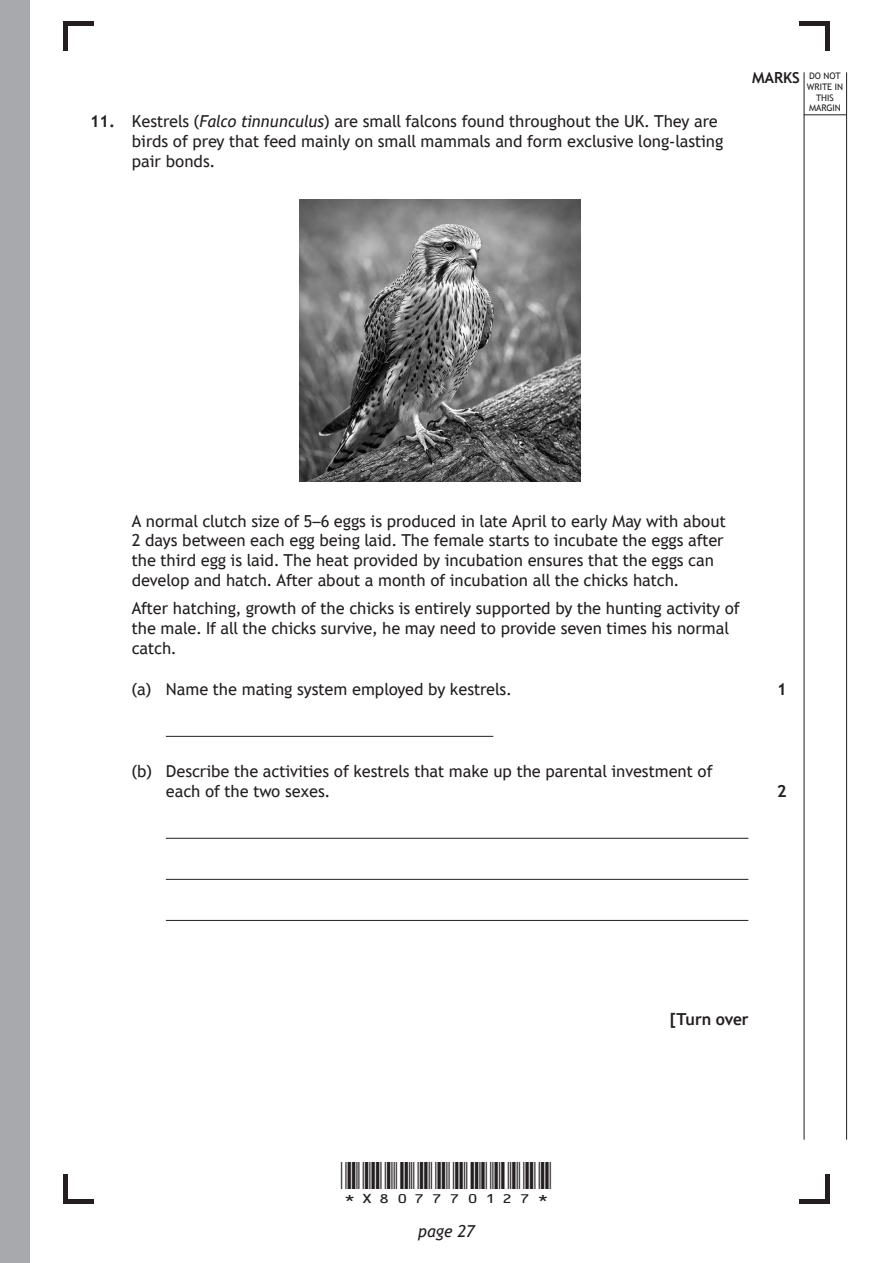
Selectable page text
MARKS _{W}^{D}_{R}^{O}_{I} _{T}^{N}OT
                                                                    E IN
                                                                   THIS
                                                                  MARGIN
11. Kestrels (Falco tinnunculus) are small falcons found throughout the UK. They are
    birds of prey that feed mainly on small mammals and form exclusive long‑lasting
    pair bonds.

    A normal clutch size of 5–6 eggs is produced in late April to early May with about
    2 days between each egg being laid. The female starts to incubate the eggs after
    the third egg is laid. The heat provided by incubation ensures that the eggs can
    develop and hatch. After about a month of incubation all the chicks hatch.

    After hatching, growth of the chicks is entirely supported by the hunting activity of
    the male. If all the chicks survive, he may need to provide seven times his normal
    catch.

    (a) Name the mating system employed by kestrels.           1

    (b) Describe the activities of kestrels that make up the parental investment of
       each of the two sexes.                                  2

                                                      [Turn over

                       *X807770127*

                              page 27
PDF page 28
Selectable page text
MARKS _{W}^{D}_{R}^{O}_{I} _{T}^{N}OT
                                                                    E IN
                                                                   THIS
                                                                  MARGIN
11. (continued)
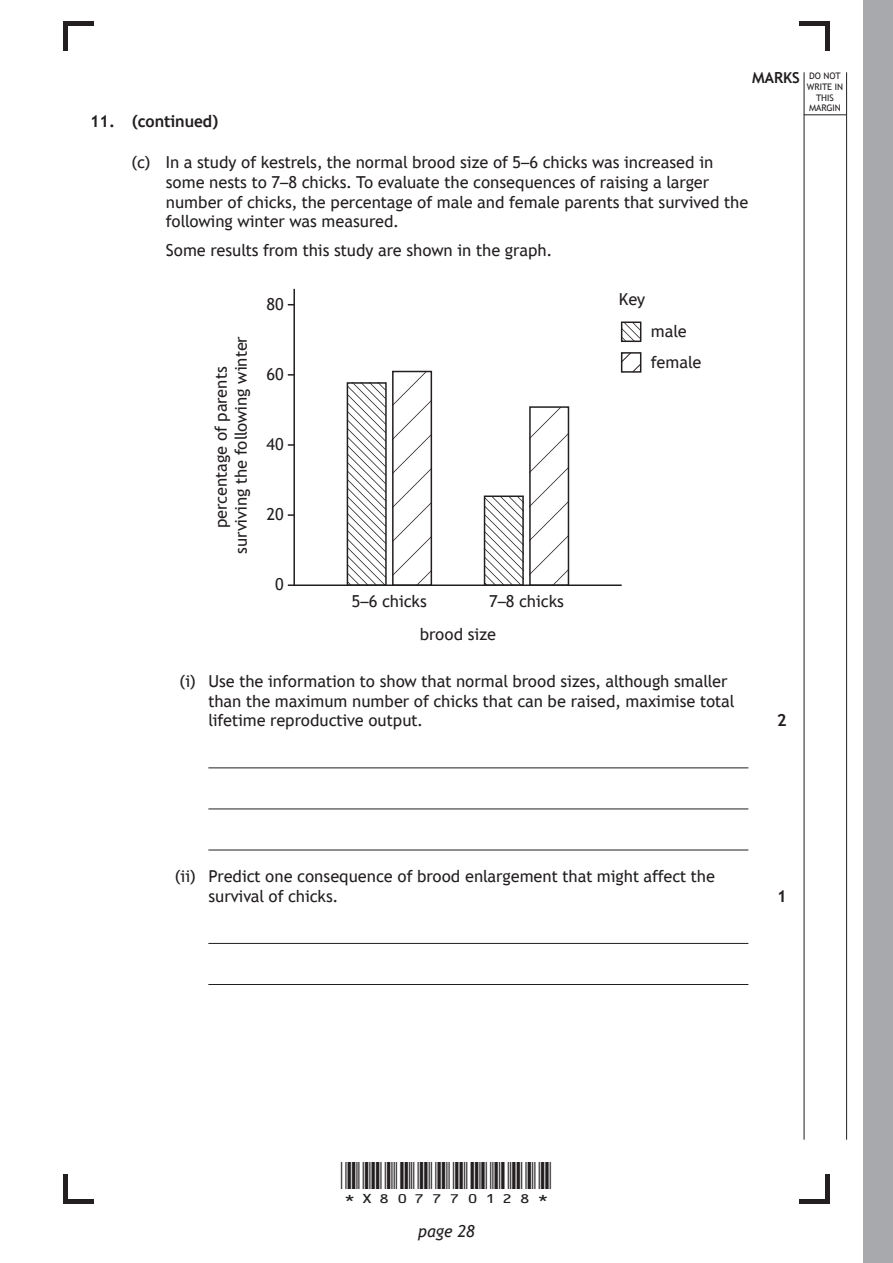
    (c) In a study of kestrels, the normal brood size of 5–6 chicks was increased in
       some nests to 7–8 chicks. To evaluate the consequences of raising a larger
       number of chicks, the percentage of male and female parents that survived the
       following winter was measured.
       Some results from this study are shown in the graph.

                80

                60

                40

                20

                 0

                       *X807770128*

                              page 28
            stnerap
            fo
            egatnecrep
              retniw
              gniwollof
              eht
              gnivivrus
                                                 Key
                                                    male
                                                    female
                        5–6 chicks   7–8 chicks
                               brood size
         (i) Use the information to show that normal brood sizes, although smaller
           than the maximum number of chicks that can be raised, maximise total
           lifetime reproductive output.                       2
        (ii) Predict one consequence of brood enlargement that might affect the
           survival of chicks.                                 1
PDF page 29
Paper 2, Question 12
Selectable page text
MARKS _{W}^{D}_{R}^{O}_{I} _{T}^{N}OT
                                                                    E IN
                                                                   THIS
                                                                  MARGIN
12. Answer either A or B. Write your answer in the space below and on page 30.
    A  Discuss meiosis under the following headings:
         (i) meiosis I                                         7
        (ii) meiosis II.                                       2

    OR

    B  Discuss parasites under the following headings:
         (i) life cycle of Plasmodium                          6

        (ii) modification of hosts by parasites to increase transmission. 3

                                                      [Turn over

                       *X807770129*

                              page 29
PDF page 30

Selectable page text
MARKS _{W}^{D}_{R}^{O}_{I} _{T}^{N}OT
                                                      E IN
                                                     THIS
                                                    MARGIN
ADDITIONAL SPACE FOR ANSWER to question 12

          [END OF QUESTION PAPER]

         *X807770130*

                page 30
PDF page 31

Selectable page text
MARKS _{W}^{D}_{R}^{O}_{I} _{T}^{N}OT
                                                        E IN
                                                       THIS
                                                      MARGIN
ADDITIONAL SPACE FOR ANSWERS AND ROUGH WORK

           *X807770131*

                  page 31
PDF page 32

Selectable page text
MARKS _{W}^{D}_{R}^{O}_{I} _{T}^{N}OT
                                                                    E IN
                                                                   THIS
                                                                  MARGIN
            ADDITIONAL SPACE FOR ANSWERS AND ROUGH WORK

Acknowledgement of copyright
Question 3 Jesus Cobaleda/shutterstock.com
Question 7 (b) Cathy Keifer/shutterstock.com

Question 8 (b) GPPets/shutterstock.com
Question 9 Tommy Svensson/shutterstock.com
Question 9 (b) I mage of beaver is taken from https://scottishwildlifetrust.org.uk/2021/05/how-to-spot-a-
           beaver-in-knapdale-forest/. Reproduced by kind permission of Scottish Wildlife Trust.
Question 11 Behramkhan03/shutterstock.com

                       *X807770132*

                              page 32