2023 Advanced Higher Biology - Paper 1 questions
Source: Scottish Qualifications Authority (SQA) / Qualifications Scotland. This is a StemInteract HTML companion, not an official HTML edition. Selectable text is supplied alongside original page images. Use the images or original PDF for equations, powers, fractions, vector notation, tables and diagrams; text extraction cannot fully preserve mathematical layout.
Jump to a question
PDF page 1
Selectable page text
AH
National
Qualications
2023
X807/77/02 Biology
Section 1 — Questions
THURSDAY, 27 APRIL
1:00 PM – 4:00 PM
Instructions for the completion of Section 1 are given on page 02 of your question and answer
booklet X807/77/01.
Record your answers on the answer grid on page 03 of your question and answer booklet.
Before leaving the examination room you must give your question and answer booklet to the
Invigilator; if you do not, you may lose all the marks for this paper.
©
*X8077702*
A/PBPDF page 2
Paper 1, Question 1Paper 1, Question 2Paper 1, Question 3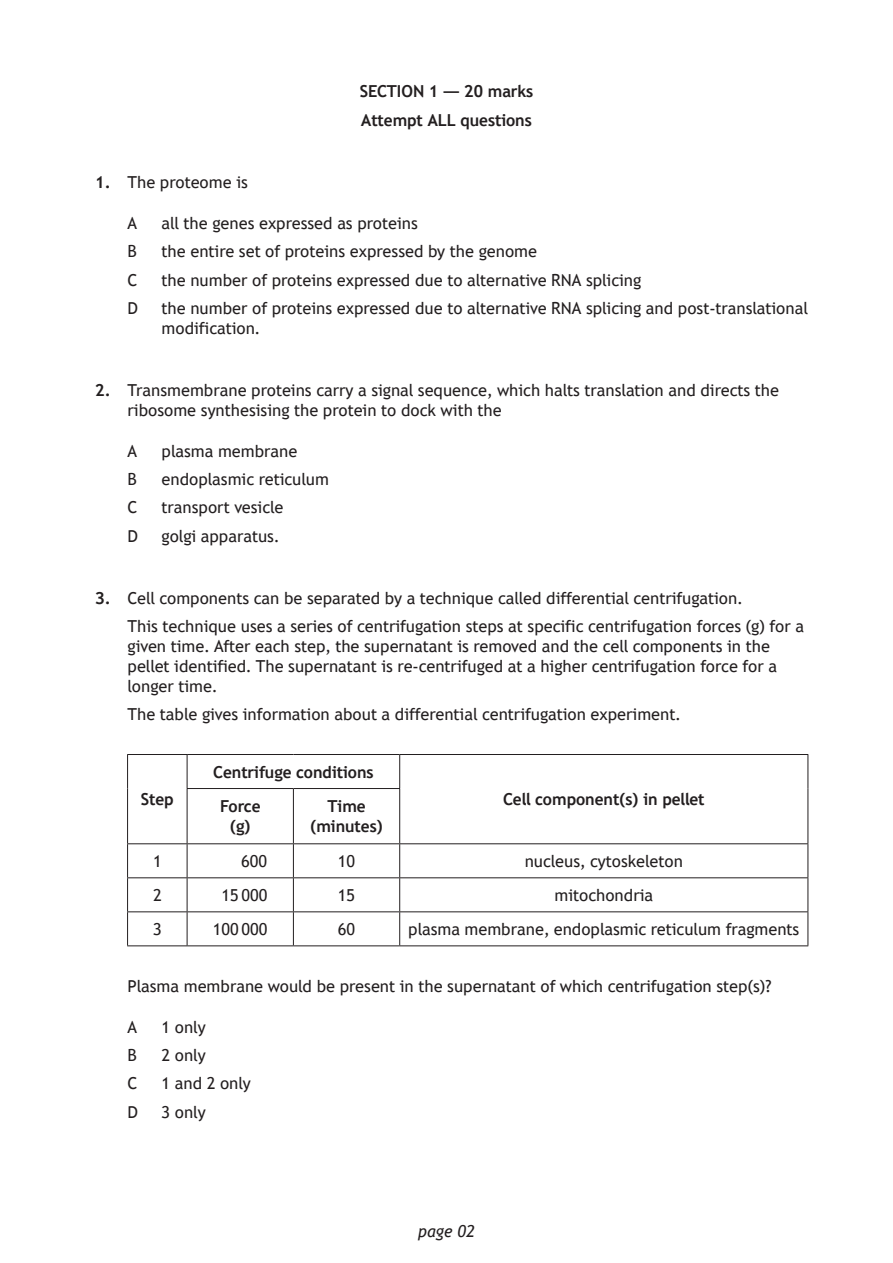
Selectable page text
SECTION 1 — 20 marks

                        Attempt ALL questions

1. The proteome is

   A  all the genes expressed as proteins

   B  the entire set of proteins expressed by the genome
   C  the number of proteins expressed due to alternative RNA splicing
   D  the number of proteins expressed due to alternative RNA splicing and post‑translational
      modification.

2. Transmembrane proteins carry a signal sequence, which halts translation and directs the
   ribosome synthesising the protein to dock with the

   A  plasma membrane
   B  endoplasmic reticulum

   C  transport vesicle
   D  golgi apparatus.

3. Cell components can be separated by a technique called differential centrifugation.

   This technique uses a series of centrifugation steps at specific centrifugation forces (g) for a
   given time. After each step, the supernatant is removed and the cell components in the
   pellet identified. The supernatant is re‑centrifuged at a higher centrifugation force for a
   longer time.
   The table gives information about a differential centrifugation experiment.

           Centrifuge conditions

    Step                             Cell component(s) in pellet
           Force     Time
            (g)     (minutes)
     1       600      10               nucleus, cytoskeleton

     2     15 000     15                  mitochondria
     3     100 000    60     plasma membrane, endoplasmic reticulum fragments

   Plasma membrane would be present in the supernatant of which centrifugation step(s)?

   A  1 only

   B  2 only
   C  1 and 2 only

   D  3 only

                             page 02
PDF page 3
Paper 1, Question 4Paper 1, Question 5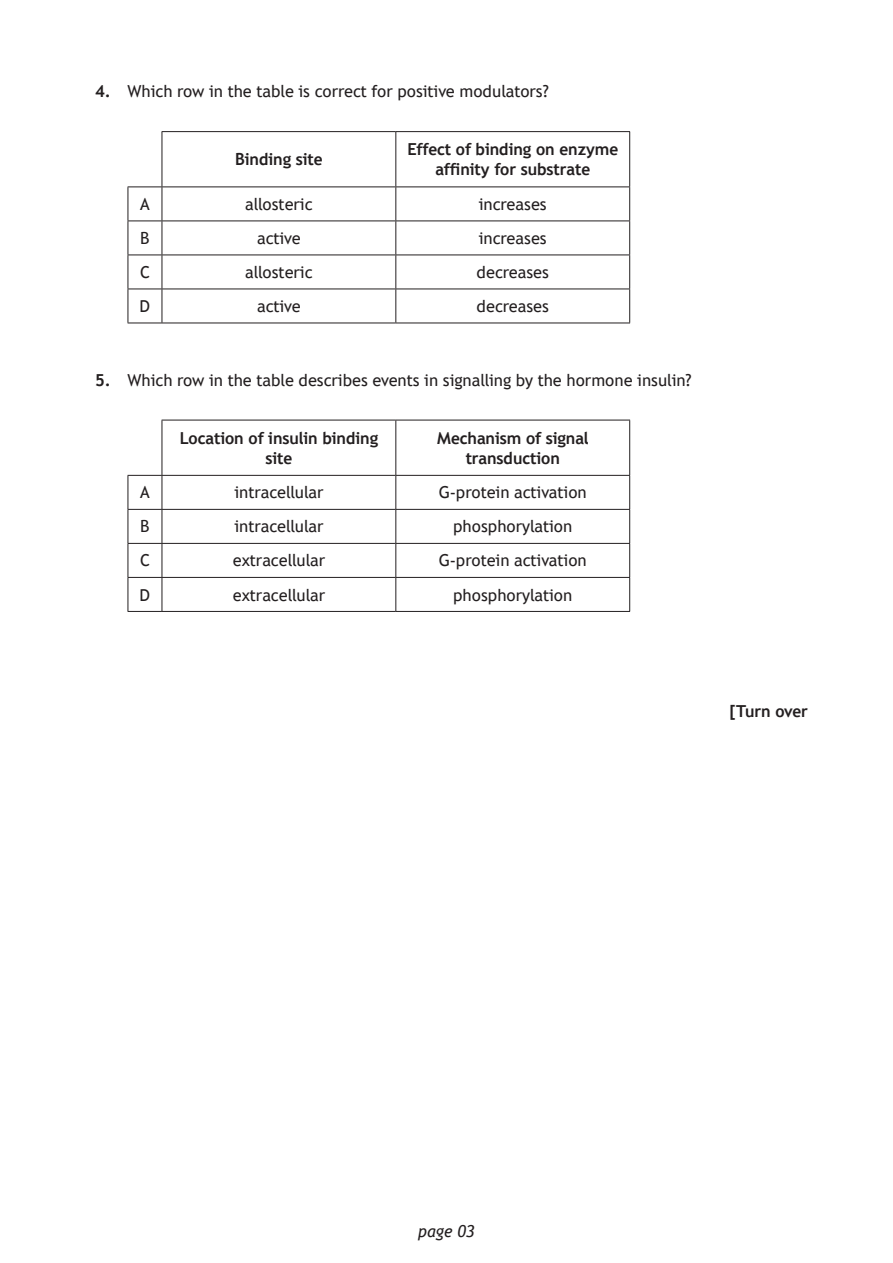
Selectable page text
4. Which row in the table is correct for positive modulators?

                            Effect of binding on enzyme
             Binding site
                               affinity for substrate
    A         allosteric           increases

    B          active              increases

    C         allosteric           decreases
    D          active              decreases

5. Which row in the table describes events in signalling by the hormone insulin?

        Location of insulin binding Mechanism of signal
               site               transduction

    A        intracellular     G‑protein activation

    B        intracellular       phosphorylation
    C       extracellular      G‑protein activation

    D       extracellular        phosphorylation

                                                          [Turn over

                             page 03
PDF page 4
Paper 1, Question 6Paper 1, Question 7Paper 1, Question 8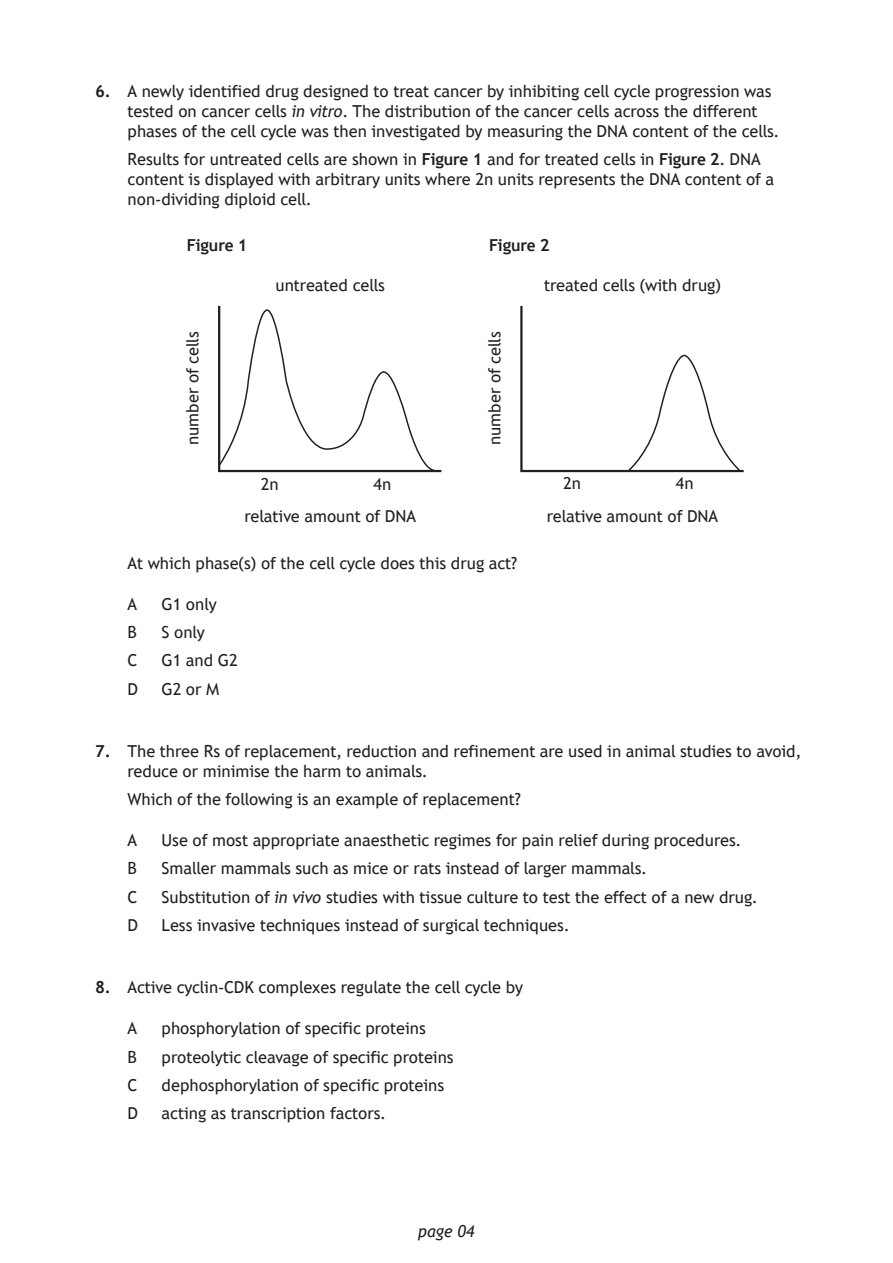
Selectable page text
6. A newly identified drug designed to treat cancer by inhibiting cell cycle progression was
   tested on cancer cells in vitro. The distribution of the cancer cells across the different
   phases of the cell cycle was then investigated by measuring the DNA content of the cells.

   Results for untreated cells are shown in Figure 1 and for treated cells in Figure 2. DNA
   content is displayed with arbitrary units where 2n units represents the DNA content of a
   non‑dividing diploid cell.

        Figure 1                    Figure 2

                untreated cells          treated cells (with drug)

             relative amount of DNA      relative amount of DNA

                             page 04
        sllec
        fo
        rebmun
                                    sllec
                                    fo
                                    rebmun
               2n        4n                2n        4n
   At which phase(s) of the cell cycle does this drug act?
   A  G1 only
   B  S only
   C  G1 and G2
   D  G2 or M
7. The three Rs of replacement, reduction and refinement are used in animal studies to avoid,
   reduce or minimise the harm to animals.
   Which of the following is an example of replacement?
   A  Use of most appropriate anaesthetic regimes for pain relief during procedures.
   B  Smaller mammals such as mice or rats instead of larger mammals.
   C  Substitution of in vivo studies with tissue culture to test the effect of a new drug.
   D  Less invasive techniques instead of surgical techniques.
8. Active cyclin‑CDK complexes regulate the cell cycle by
   A  phosphorylation of specific proteins
   B  proteolytic cleavage of specific proteins
   C  dephosphorylation of specific proteins
   D  acting as transcription factors.
PDF page 5
Paper 1, Question 9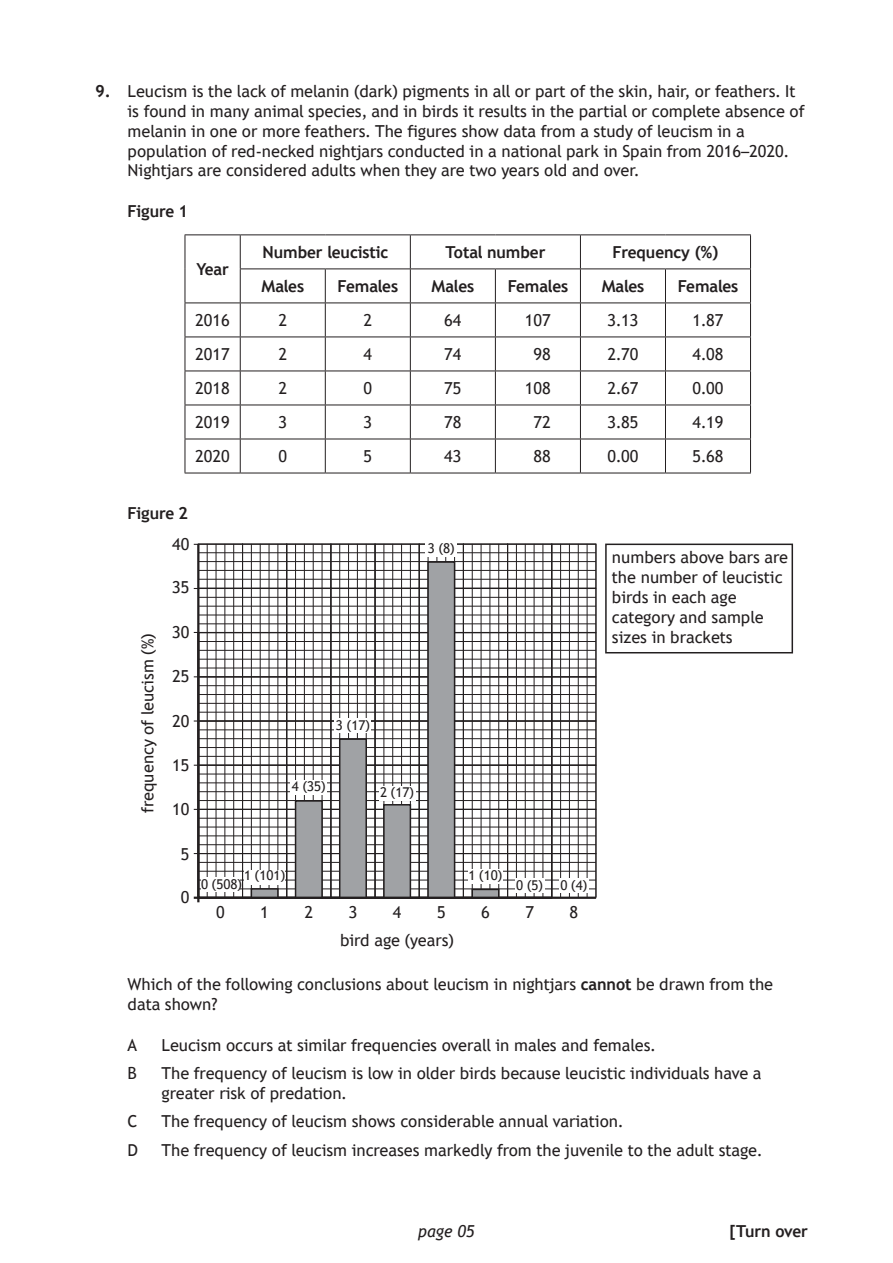
Selectable page text
9. Leucism is the lack of melanin (dark) pigments in all or part of the skin, hair, or feathers. It
   is found in many animal species, and in birds it results in the partial or complete absence of
   melanin in one or more feathers. The figures show data from a study of leucism in a
   population of red‑necked nightjars conducted in a national park in Spain from 2016–2020.
   Nightjars are considered adults when they are two years old and over.

   Figure 1

               Number leucistic Total number   Frequency (%)
         Year
               Males  Females  Males  Females Males  Females
         2016    2      2       64     107     3.13    1.87

         2017    2      4       74      98     2.70    4.08

         2018    2      0       75     108     2.67    0.00
         2019    3      3       78      72     3.85    4.19

         2020    0      5       43      88     0.00    5.68

   Figure 2

                                               numbers above bars are
                                               the number of leucistic
                                               birds in each age
                                               category and sample
                                               sizes in brackets

                      bird age (years)

                             page 05
    )%(
    msicuel
    fo
    ycneuqerf
       40
                              3 (8)
       35
       30
       25
       20
                      3 (17)
       15
                  4 (35)
                          2 (17)
       10
        5
             1 (101)              1 (10)
           508)                       0 (5) 0 (4)
        0 ⁰⁽
           0   1   2   3   4   5   6   7   8
   Which of the following conclusions about leucism in nightjars cannot be drawn from the
   data shown?
   A  Leucism occurs at similar frequencies overall in males and females.
   B  The frequency of leucism is low in older birds because leucistic individuals have a
      greater risk of predation.
   C  The frequency of leucism shows considerable annual variation.
   D  The frequency of leucism increases markedly from the juvenile to the adult stage.
                                                          [Turn over
PDF page 6
Paper 1, Question 10Paper 1, Question 11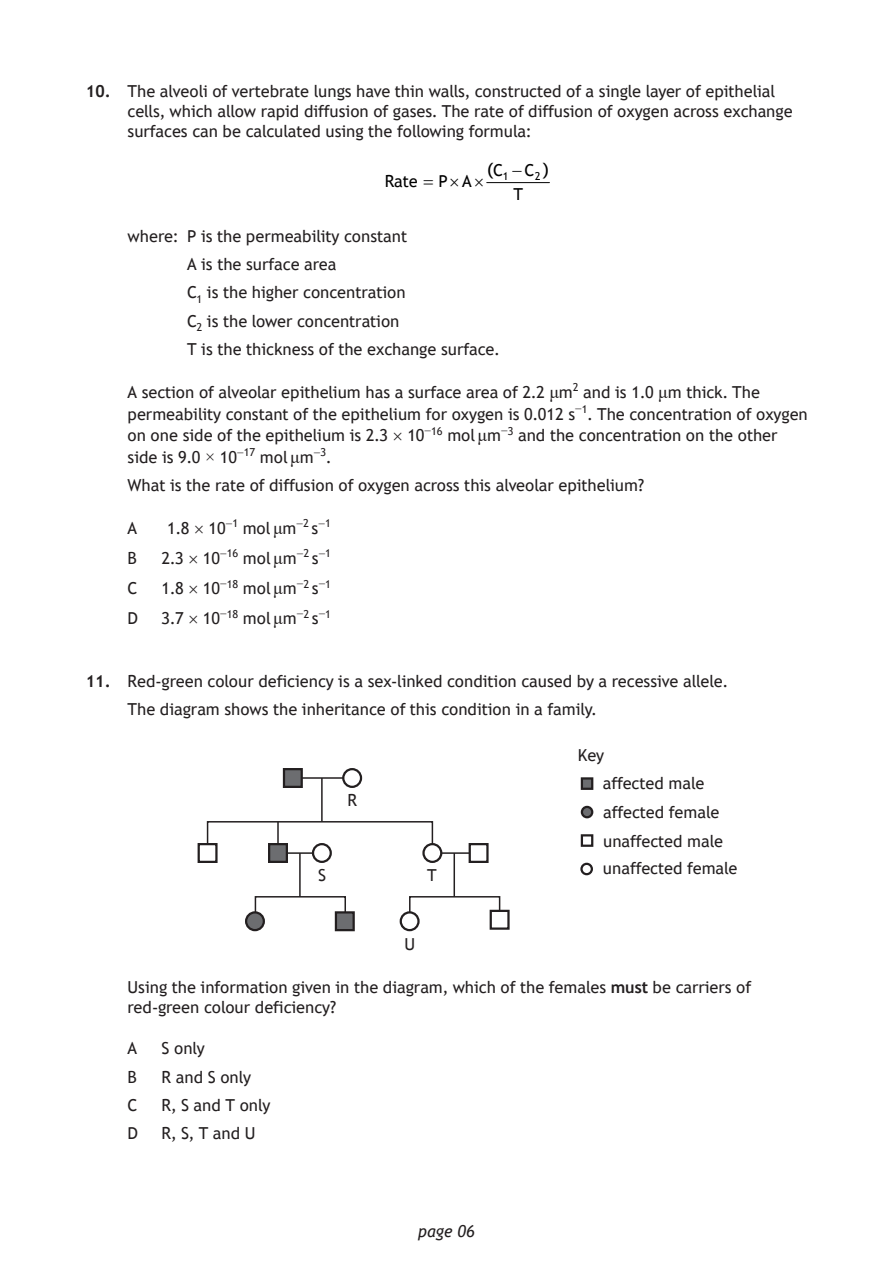
Selectable page text
10. The alveoli of vertebrate lungs have thin walls, constructed of a single layer of epithelial
    cells, which allow rapid diffusion of gases. The rate of diffusion of oxygen across exchange
    surfaces can be calculated using the following formula:

                                     (C₁−C₂)
                           Rate = P×A×
                                       T

    where: P is the permeability constant
         A is the surface area

         C₁ is the higher concentration
         C₂ is the lower concentration

         T is the thickness of the exchange surface.

    A section of alveolar epithelium has a surface area of 2.2 μm² and is 1.0 μm thick. The
    permeability constant of the epithelium for oxygen is 0.012 s⁻¹. The concentration of oxygen
    on one side of the epithelium is 2.3 × 10⁻¹⁶ mol μm⁻³ and the concentration on the other
    side is 9.0 × 10⁻¹⁷ mol μm⁻³.

    What is the rate of diffusion of oxygen across this alveolar epithelium?

    A  1.8 × 10⁻¹ mol μm⁻² s⁻¹
    B  2.3 × 10⁻¹⁶ mol μm⁻² s⁻¹

    C  1.8 × 10⁻¹⁸ mol μm⁻² s⁻¹
    D  3.7 × 10⁻¹⁸ mol μm⁻² s⁻¹

11. Red‑green colour deficiency is a sex‑linked condition caused by a recessive allele.
    The diagram shows the inheritance of this condition in a family.

                                             Key

                                               affected male
                        R
                                               affected female
                                               unaffected male
                                               unaffected female
                     S         T

                             U

    Using the information given in the diagram, which of the females must be carriers of
    red‑green colour deficiency?

    A  S only

    B  R and S only
    C  R, S and T only

    D  R, S, T and U

                              page 06
PDF page 7
Paper 1, Question 12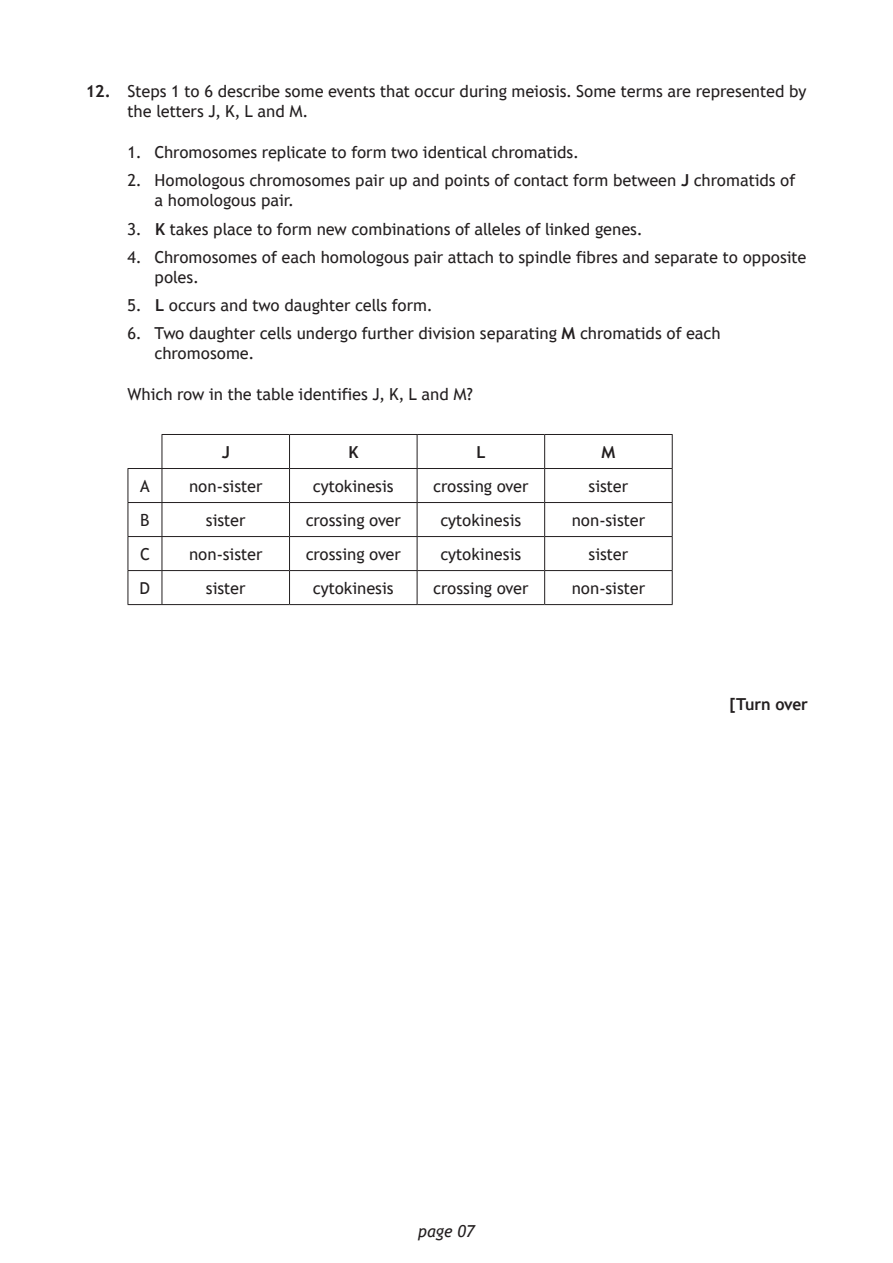
Selectable page text
12. Steps 1 to 6 describe some events that occur during meiosis. Some terms are represented by
    the letters J, K, L and M.

    1. Chromosomes replicate to form two identical chromatids.

    2. Homologous chromosomes pair up and points of contact form between J chromatids of
      a homologous pair.
    3. K takes place to form new combinations of alleles of linked genes.

    4. Chromosomes of each homologous pair attach to spindle fibres and separate to opposite
      poles.
    5. L occurs and two daughter cells form.

    6. Two daughter cells undergo further division separating M chromatids of each
      chromosome.

    Which row in the table identifies J, K, L and M?

            J           K           L          M

     A   non‑sister  cytokinesis crossing over sister
     B     sister   crossing over cytokinesis non‑sister

     C   non‑sister crossing over cytokinesis sister

     D     sister    cytokinesis crossing over non‑sister

                                                           [Turn over

                              page 07
PDF page 8
Paper 1, Question 13Paper 1, Question 14Paper 1, Question 15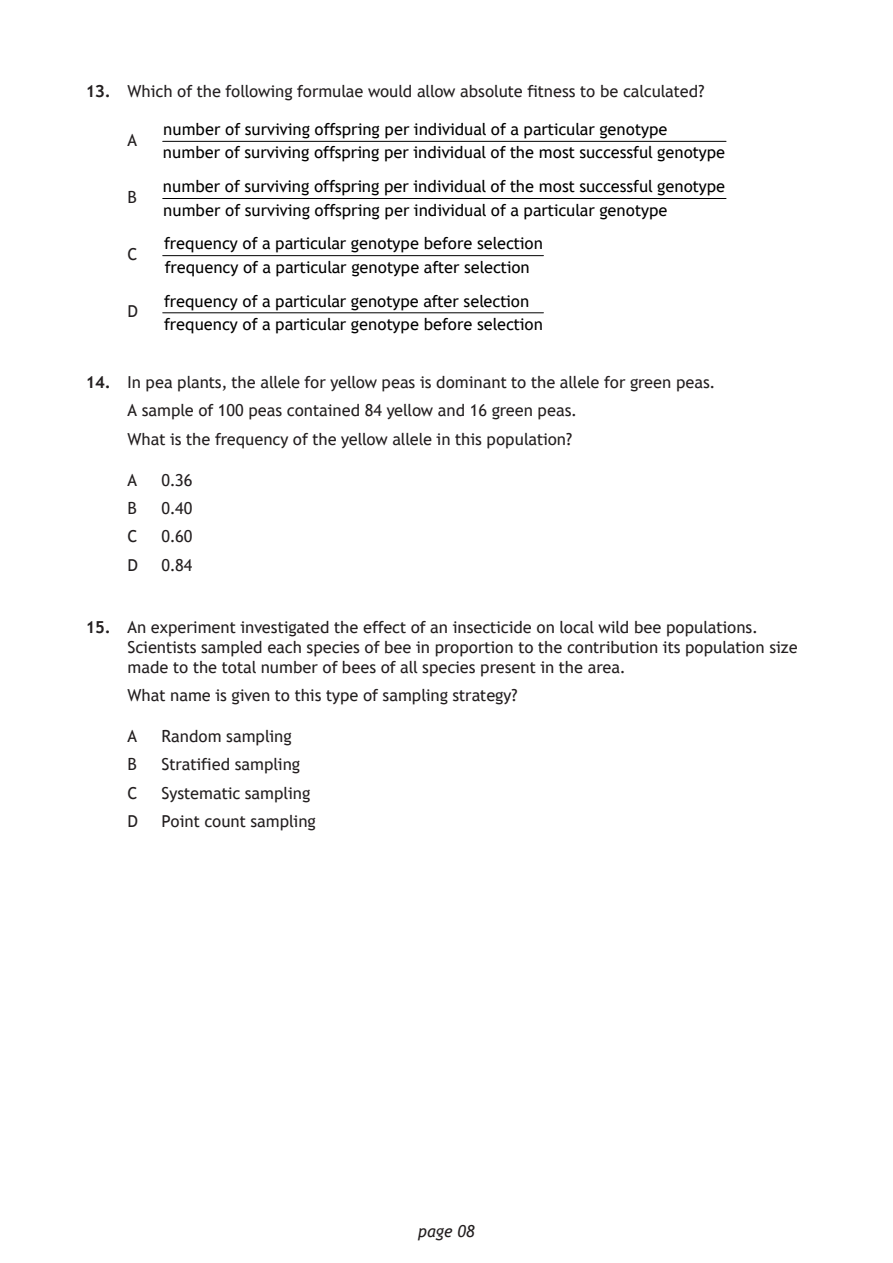
Selectable page text
13. Which of the following formulae would allow absolute fitness to be calculated?

       number of surviving offspring per individual of a particular genotype
    A
       number of surviving offspring per individual of the most successful genotype
       number of surviving offspring per individual of the most successful genotype
    B
       number of surviving offspring per individual of a particular genotype
       frequency of a particular genotype before selection
    C
       frequency of a particular genotype after selection
       frequency of a particular genotype after selection
    D
       frequency of a particular genotype before selection

14. In pea plants, the allele for yellow peas is dominant to the allele for green peas.

    A sample of 100 peas contained 84 yellow and 16 green peas.
    What is the frequency of the yellow allele in this population?

    A  0.36

    B  0.40
    C  0.60

    D  0.84

15. An experiment investigated the effect of an insecticide on local wild bee populations.
    Scientists sampled each species of bee in proportion to the contribution its population size
    made to the total number of bees of all species present in the area.
    What name is given to this type of sampling strategy?

    A  Random sampling

    B  Stratified sampling
    C  Systematic sampling

    D  Point count sampling

                              page 08
PDF page 9
Paper 1, Question 16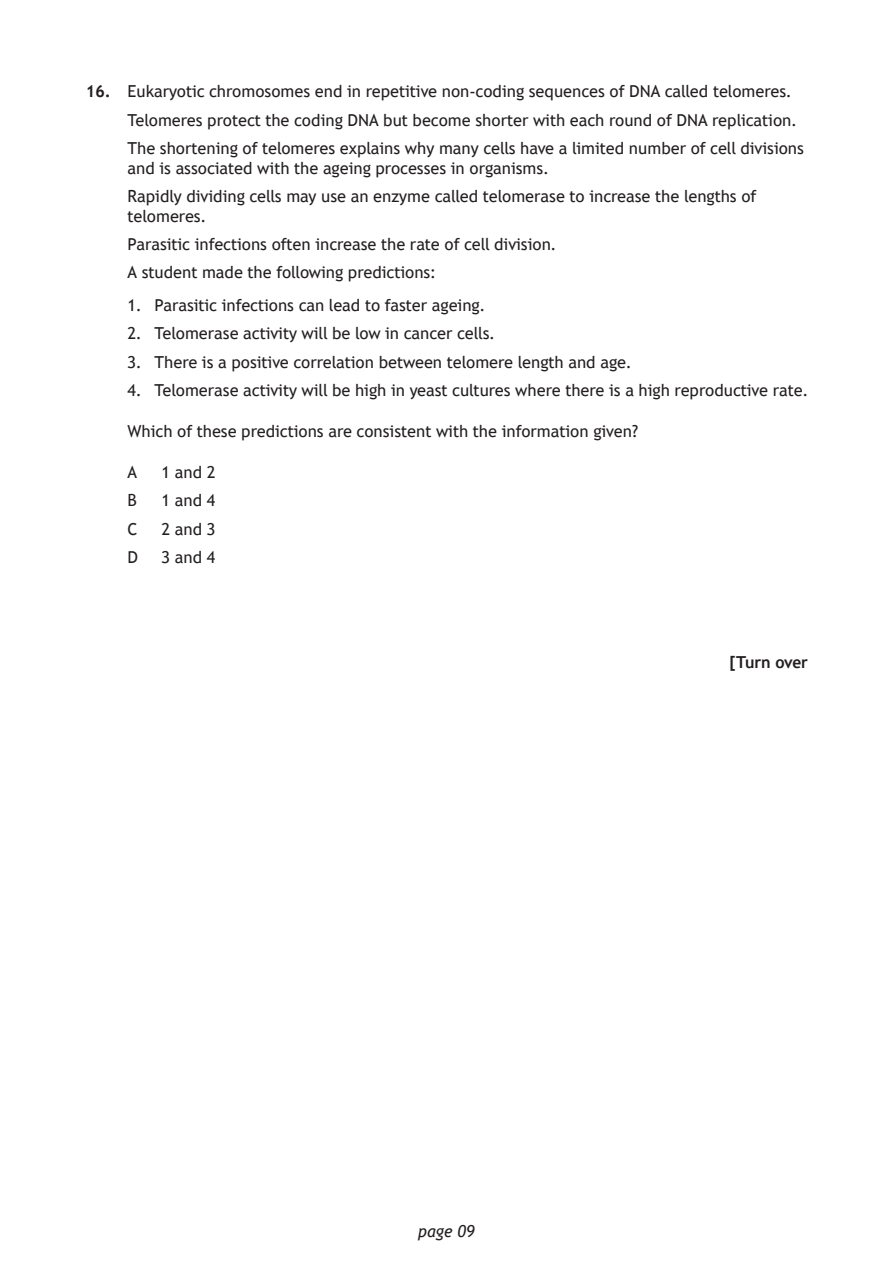
Selectable page text
16. Eukaryotic chromosomes end in repetitive non‑coding sequences of DNA called telomeres.

    Telomeres protect the coding DNA but become shorter with each round of DNA replication.
    The shortening of telomeres explains why many cells have a limited number of cell divisions
    and is associated with the ageing processes in organisms.

    Rapidly dividing cells may use an enzyme called telomerase to increase the lengths of
    telomeres.
    Parasitic infections often increase the rate of cell division.

    A student made the following predictions:
    1. Parasitic infections can lead to faster ageing.

    2. Telomerase activity will be low in cancer cells.
    3. There is a positive correlation between telomere length and age.

    4. Telomerase activity will be high in yeast cultures where there is a high reproductive rate.

    Which of these predictions are consistent with the information given?

    A  1 and 2
    B  1 and 4

    C  2 and 3
    D  3 and 4

                                                           [Turn over

                              page 09
PDF page 10
Paper 1, Question 17Paper 1, Question 18Paper 1, Question 19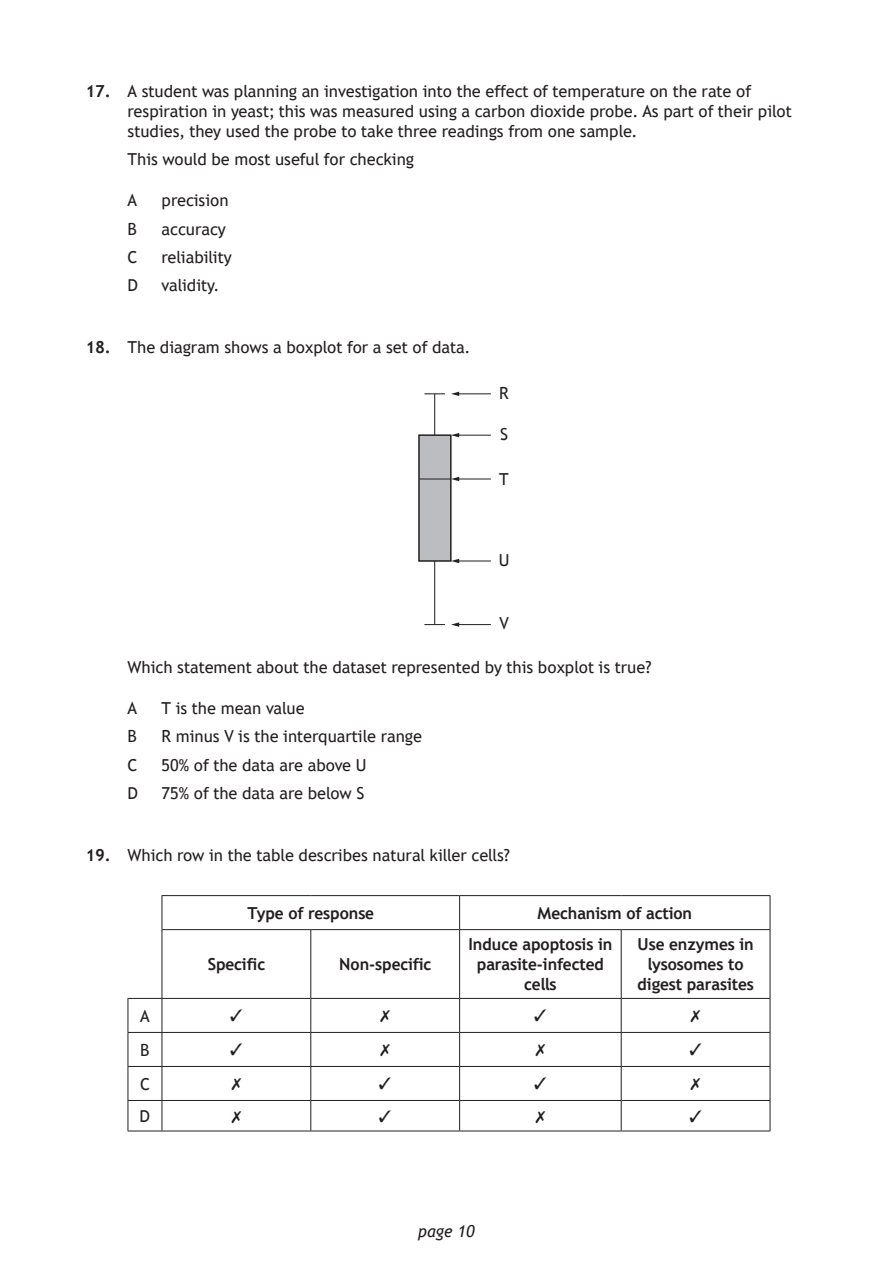
Selectable page text
17. A student was planning an investigation into the effect of temperature on the rate of
    respiration in yeast; this was measured using a carbon dioxide probe. As part of their pilot
    studies, they used the probe to take three readings from one sample.

    This would be most useful for checking

    A  precision
    B  accuracy

    C  reliability
    D  validity.

18. The diagram shows a boxplot for a set of data.

                                      R

                                      S

                                      T

                                      U

                                      V

    Which statement about the dataset represented by this boxplot is true?

    A  T is the mean value
    B  R minus V is the interquartile range

    C  50% of the data are above U
    D  75% of the data are below S

19. Which row in the table describes natural killer cells?

               Type of response          Mechanism of action

                                   Induce apoptosis in Use enzymes in
           Specific    Non‑specific parasite‑infected lysosomes to
                                        cells      digest parasites

     A       ✓             ✗             ✓              ✗
     B       ✓             ✗             ✗             ✓

     C       ✗             ✓             ✓              ✗

     D       ✗             ✓             ✗             ✓

                              page 10
PDF page 11
Paper 1, Question 20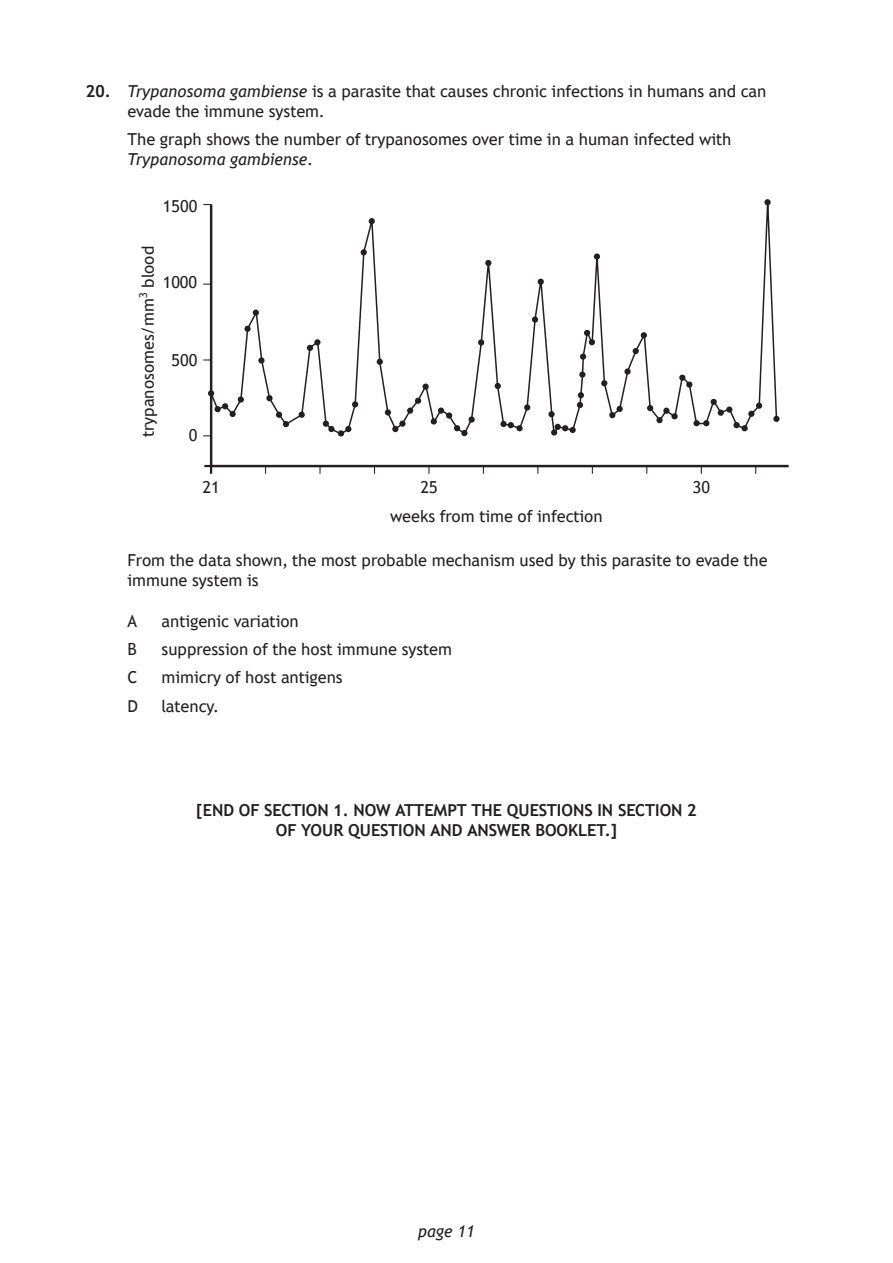
Selectable page text
20. Trypanosoma gambiense is a parasite that causes chronic infections in humans and can
    evade the immune system.

    The graph shows the number of trypanosomes over time in a human infected with
    Trypanosoma gambiense.

                            weeks from time of infection

                              page 11
     doolb
     3mm/semosonapyrt
       1500
       1000
        500
         0
           21                  25                       30
    From the data shown, the most probable mechanism used by this parasite to evade the
    immune system is
    A  antigenic variation
    B  suppression of the host immune system
    C  mimicry of host antigens
    D  latency.
          [END OF SECTION 1. NOW ATTEMPT THE QUESTIONS IN SECTION 2
                 OF YOUR QUESTION AND ANSWER BOOKLET.]
PDF page 12

Selectable page text
[BLANK PAGE]

DO NOT WRITE ON THIS PAGE

       page 12